

For operators planning or upgrading an indoor play centre, understanding how long commercial playground equipment lasts is important for budgeting, safety and planning. Playtec understands that equipment lifespan depends on more than its initial strength or appearance. Material quality, design, installation, usage levels, environmental conditions and ongoing maintenance all influence how long equipment remains safe and serviceable.
Different components also wear at different rates. Structural frames and platforms may remain serviceable for many years, while padding, netting, flooring and interactive features may require earlier repair or replacement depending on their materials and how heavily they are used.
Understanding these differences helps operators plan maintenance, recognise early signs of deterioration and make decisions about repair, refurbishment or replacement. With quality equipment, appropriate inspections and proactive care, an indoor playground can remain safe, attractive and commercially viable for many years.
Expected Lifespans of Key Playground Components
Commercial playground equipment is designed for long-term use, but individual components have different service lives. Understanding typical lifespan ranges helps operators budget for maintenance, plan refurbishments and reduce unexpected downtime.
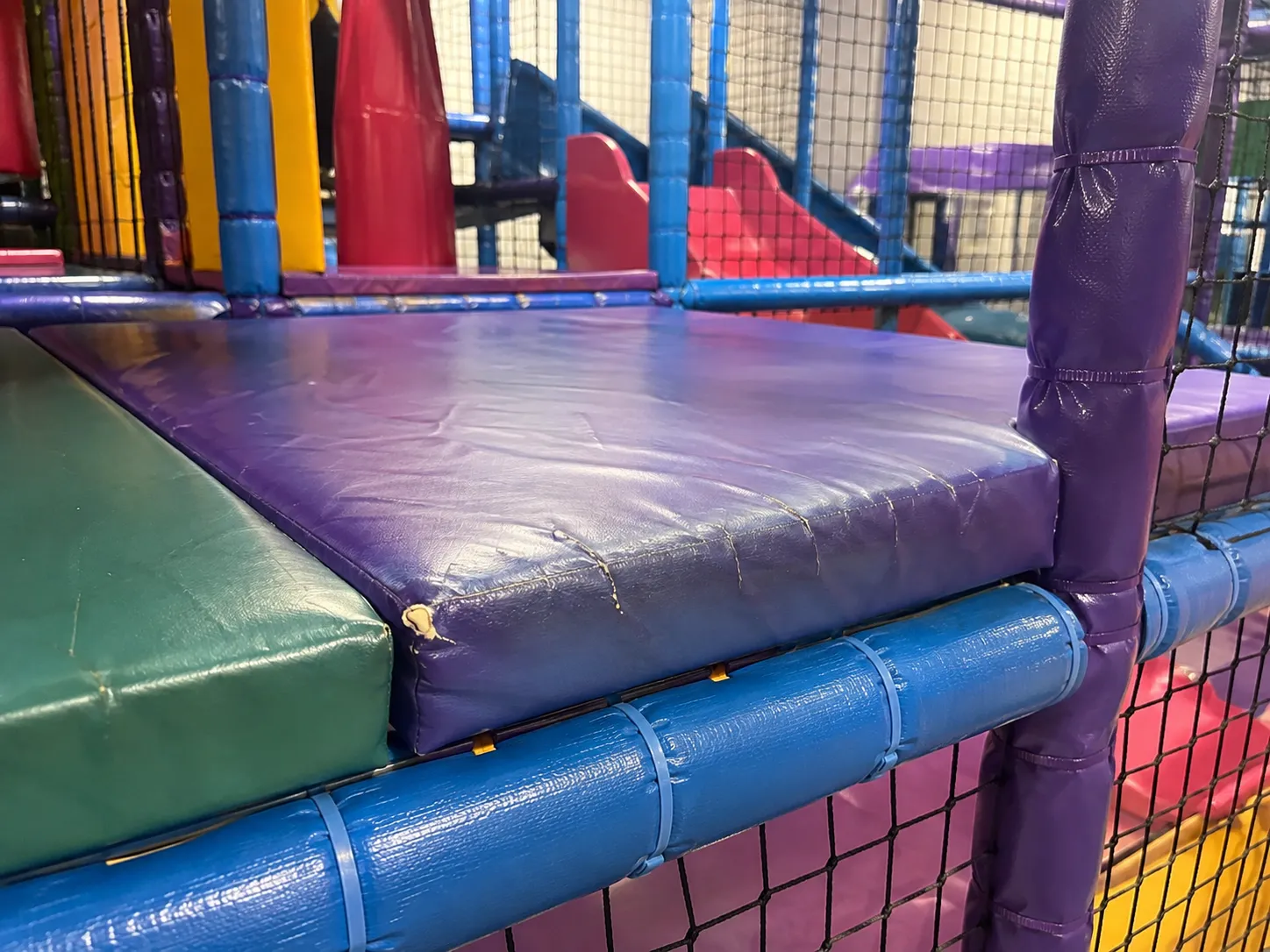
Actual service life depends on factors such as visitor numbers, cleaning practices, environmental conditions, material quality, installation and how quickly damage is addressed. The following figures are general planning guides based on appropriate commercial use and maintenance; manufacturer recommendations and the actual condition of the equipment should always take priority.
Frames
Steel support frames are among the longest-lasting components of an indoor play structure. As a planning guide, quality frames may remain serviceable for 10 to 15 years or longer when appropriately designed, installed, inspected and maintained.
Corrosion is one of the main threats. Moisture around entrances, cafés or water features can damage protective coatings and eventually cause rust. Scratches, chips and exposed areas should be addressed promptly to prevent corrosion from spreading.
Clamps, bolts and other connection points can also loosen through repeated use around busy features. Regular inspections, tightening and replacement of worn fixings can help protect the wider structure and extend its service life.
Padding and Vinyl
Safety padding and vinyl coverings have a shorter service life, often around 5 to 8 years in busy commercial venues. Constant impacts, cleaning and everyday contact affect the protective covering and internal foam.
Early signs of deterioration include fading, scuffing, cracking and loss of resilience. Once padding remains compressed, foam becomes exposed or vinyl begins splitting, replacement should be considered to maintain safety, hygiene and appearance.
Using manufacturer-approved cleaning products and avoiding abrasive brushes or excessive water can help reduce premature deterioration. High-use areas may need replacement sooner than less frequently used padding.
Netting
Safety netting and rope elements can typically last around 5 to 10 years, depending on material quality, usage and maintenance. Stitching, attachment points and fixings often deteriorate before the main netting material.
Fraying, stretching, loose sections or enlarged mesh openings are signs that netting requires attention. If the required tension or barrier performance can no longer be maintained, replacement may be necessary.
Plastic-coated netting may perform better in humid environments, but aggressive cleaning, excessive loading and misuse can still shorten its service life.
Flooring
The lifespan of indoor playground flooring varies according to the material, installation and traffic levels. EVA tiles and similar surfaces may provide around 3 to 7 years of service in heavily used areas, while higher-grade rubber systems may last 8 to 12 years or longer with appropriate care.
Flattening, worn surfaces, lifted edges, damaged joints and difficulty removing ingrained dirt can indicate declining performance. Damaged or deteriorated flooring should be assessed and replaced where necessary to prevent trip hazards and maintain the required impact protection.
How Usage Levels and Customer Volume Affect Equipment Lifespan
The lifespan of playground equipment is heavily influenced by how often and how intensely it is used. Two venues with identical equipment can experience very different levels of wear depending on visitor numbers, operating hours and which features receive the most activity.
A busy playground places greater cumulative stress on fasteners, joints, padding, netting, flooring and other high-contact components. Popular areas such as slides, climbing routes, stairs, platforms and entrances will require attention sooner than quieter sections.
Operators should consider several factors when assessing usage-related wear.
Visitor numbers directly affect how frequently children climb, slide, jump and interact with equipment. Higher footfall means faster wear in high-contact areas.
Operating hours also matter. Venues open for long hours or seven days a week accumulate more use and have fewer opportunities to complete inspections, cleaning and minor repairs.
Popular play features can create uneven wear. Children naturally gravitate towards particular slides, climbing structures, tunnels and interactive features, meaning one section may deteriorate faster than another.
Maintenance frequency should reflect these usage patterns. High-traffic areas may require more frequent inspections and earlier replacement of worn components than lower-use sections.
High visitor numbers do not necessarily mean the entire playground needs to be replaced sooner. Monitoring actual usage allows operators to focus maintenance and component replacement where it is most needed, helping maintain safety while getting maximum service life from equipment that remains in good condition.
Factors That Cause Indoor Playground Equipment to Wear Out Faster
Even high-quality commercial playground equipment can deteriorate prematurely when exposed to unsuitable conditions or poor operating practices. While age is unavoidable, many causes of accelerated wear can be controlled through appropriate maintenance and venue management.
Common factors include heavy use and rough play, increasing stress on joints, netting, flooring and padding. Behaviours can also place equipment under loads it was not designed to withstand.
Harsh cleaning methods can damage vinyl, foam, plastics and metal components. Strong chemicals, abrasive brushes and excessive water may accelerate fading, cracking, surface damage or corrosion. Manufacturer-approved cleaning products should be used wherever specified.
Heat and UV exposure can also affect materials. Direct sunlight through windows and consistently high temperatures may cause some plastics and vinyls to fade, become brittle or crack over time.
Humidity and moisture are another concern. Condensation, spills and damp conditions around entrances, cafés or water features can contribute to corrosion, mould and deterioration inside soft-play structures.
Finally, delayed maintenance can allow small problems to become larger ones. Loose bolts, torn padding and damaged netting are generally easier and less expensive to address when identified early.
Controlling these factors helps operators reduce unnecessary wear, extend equipment life and maintain a safer, more attractive play environment.
How Equipment Quality and Installation Affect Longevity
The quality of equipment and the standard of its installation have a direct influence on how long it remains safe, functional and cost-effective. Choosing durable commercial playground equipment made from materials suited to continuous commercial use can help it withstand repeated impacts, cleaning and high visitor traffic.
Installation is also important. Even well-designed equipment can experience premature wear if frames are poorly aligned, connections are incorrectly secured or anchors are not installed according to the manufacturer's requirements. Professional playground installation helps ensure frames, connections and anchors are correctly positioned and secured, reducing unnecessary stress and premature wear.
When assessing equipment, operators should consider material quality, structural design, installation accuracy and future maintenance requirements. Durable steel, protective coatings, vinyl, foam, netting and hardware should be appropriate for commercial conditions, while properly engineered frames and connections should account for expected usage, capacity and the intended type of play.
A well-installed playground is also easier to inspect and maintain. Accessible fixings and correctly fitted components make repairs and replacement more straightforward, while quality manufacturers may be able to provide compatible replacement parts as individual components wear out.
Choosing suitable equipment and using a professional installation process provides more than a strong initial setup. It can reduce premature repairs, simplify maintenance and provide a more predictable service life.
How Weather, Humidity and Indoor Conditions Affect Playground Equipment
Although indoor playgrounds are protected from direct outdoor exposure, conditions inside the building can still affect how equipment ages. Humidity, condensation, heat, sunlight, ventilation and moisture from visitors or cleaning can all influence frames, padding, plastics, netting and flooring.
Maintaining a clean, dry and reasonably stable environment can help slow deterioration and reduce the risk of corrosion, mould and premature surface damage.
Humidity and Moisture
High humidity and condensation can increase the risk of corrosion around steel frames, fixings, brackets and connection points. Small chips or scratches in protective coatings can allow moisture to reach the underlying metal.
Moisture can also become trapped beneath damaged padding or inside seams, creating conditions for mould and material deterioration. Recurring condensation should therefore be investigated rather than treated as a cosmetic issue.
Heat and Sunlight
Excessive heat and repeated temperature changes can accelerate the ageing of plastics, foam, vinyl and adhesives. Direct sunlight through windows, skylights or glazed entrances can also fade colours and make some materials brittle over time.
Where practical, equipment should be positioned away from prolonged direct sunlight. Effective climate control and suitable window treatments can help minimise temperature extremes and protect surfaces.
Ventilation
Good ventilation helps control heat and moisture in busy venues where children and adults generate additional warmth and humidity. Poor air circulation can leave humid conditions trapped around enclosed tunnels, platforms and other areas with limited airflow.
Maintaining heating, cooling and ventilation systems can help reduce condensation, mould and material deterioration while creating a more comfortable environment for customers and staff.
Moisture-Prone Areas
Entrances, cafés, drink stations, bathrooms and areas exposed to frequent cleaning experience more moisture than other parts of the playground. Water can affect flooring, padding, fixings and lower sections of structural frames if it is allowed to accumulate.
Spills should be dried promptly, damaged coverings repaired and pooling water prevented wherever possible. Equipment in these areas should also receive closer attention during routine inspections.
Maintaining Stable Conditions
Commercial playground equipment lasts longer when it operates in a clean, dry and reasonably stable environment. Regularly monitoring indoor conditions, maintaining ventilation and climate-control systems and responding quickly to moisture problems can help protect materials and extend service life.
These measures work alongside routine inspections and preventative maintenance to provide more reliable performance over the equipment's working life.
Signs Equipment Is Reaching the End of Its Serviceable Life
Indoor playground equipment usually shows signs of deterioration before it becomes unsafe or reaches the end of its practical service life. Recognising these changes early allows operators to arrange repairs, refurbishment or replacement before defects lead to incidents, compliance issues or unexpected closures.
During routine inspections, operators should pay attention to several warning signs.
Structural movement or damage can include rust, cracked brackets, damaged welds, loose connections, excessive movement or repeated bolt loosening. These issues may indicate structural fatigue or deterioration and should be assessed promptly.
Worn padding and surfaces may appear as compressed foam, exposed padding, cracked or brittle vinyl, deep scratches in plastic or damaged safety surfacing. These signs can indicate that protective materials are no longer performing as intended.
Damaged netting and fixings may include fraying, stretched sections, enlarged openings or repeatedly loose attachment points. These problems can compromise barriers and require repair or replacement.
Increasing maintenance requirements are another warning sign. If the same faults continue to return after repairs, downtime increases or compatible replacement parts become difficult to source, the equipment may be approaching the end of its practical service life.
Changing safety requirements can also affect older equipment. Entrapment risks, inadequate barriers or outdated access arrangements may indicate that refurbishment or replacement is necessary, even if the main structure remains physically sound.
Regular inspections help operators distinguish normal wear from problems requiring more action. Equipment does not necessarily need to be replaced simply because it is old; its actual condition, safety performance, compliance and maintenance demands are more important indicators of remaining service life.
Safety Inspections and Compliance Over the Equipment’s Lifespan
The age of commercial playground equipment does not determine whether it remains safe or compliant. Regular inspections help identify hidden wear, loose connections, damaged surfaces and other hazards before they become serious. Operators should follow the manufacturer's inspection and maintenance recommendations while meeting the safety standards, regulations and local requirements that apply to their facility and equipment. Australian Standards also provide guidance on playground inspection and maintenance, helping operators manage equipment throughout its service life.
Staff checks can identify visible issues while more detailed inspections should assess structural connections, anchor points, barriers, access routes and fall zones. Professional inspections are valuable as equipment ages, after modifications or repairs, or when recurring defects suggest a component may be approaching the end of its serviceable life. Operators should also understand the Australian playground standards that apply to the particular equipment and type of play facility they manage.
Repairs and modifications should be assessed to ensure they do not affect safety performance, while records of inspections, defects, repairs and replacement parts can help track recurring problems and plan future work. If a serious safety defect is identified, the affected equipment should be taken out of service until it has been properly assessed and rectified.
When to Repair, Refurbish or Replace the Playground
Deciding whether to repair, refurbish or replace an indoor playground should be based on its condition, safety, compliance, maintenance costs and commercial value, rather than age alone. Regular inspections help operators determine whether a problem can be resolved with a simple repair or whether more extensive work is required.
Repair
Repairs are suitable when damage is localised and the main structure remains safe and compliant. This may include loose or worn fasteners, torn netting, small areas of damaged padding, worn grip surfaces or protective caps. Minor cosmetic damage that does not affect safety or performance can also be addressed without major work.
Using compatible replacement parts and checking the equipment after repairs helps maintain its intended performance and safety. Any repair that changes access routes, fall heights or clearances should receive additional assessment.
Refurbish
Refurbishment can extend the life of a playground when the main structure remains sound but several components are showing wear or the space has become outdated. Work may include replacing worn padding, vinyl, flooring or netting, updating play features, improving the layout or refreshing colours and themes.
A well-planned refurbishment can improve safety, appearance and customer appeal while extending the life of the existing structure and avoiding the cost and disruption of complete replacement.
Replace
Full replacement should be considered when the playground can no longer be made safe, compliant or cost-effective through repairs or refurbishment. Structural corrosion, deformation or fatigue, recurring safety defects, obsolete components or a design that cannot reasonably be updated may all indicate that replacement is the better option.
Rising maintenance costs and frequent downtime are also important considerations. Planning replacement before major failures occur allows operators to manage costs, minimise disruption and ensure the new playground is designed around current safety requirements, capacity and customer expectations.
How Preventative Maintenance Extends Equipment Life
Regular preventative maintenance is vital in extending the service life of playground equipment. Regular inspections, appropriate cleaning and timely repairs help control wear before minor defects develop into larger safety or structural problems.
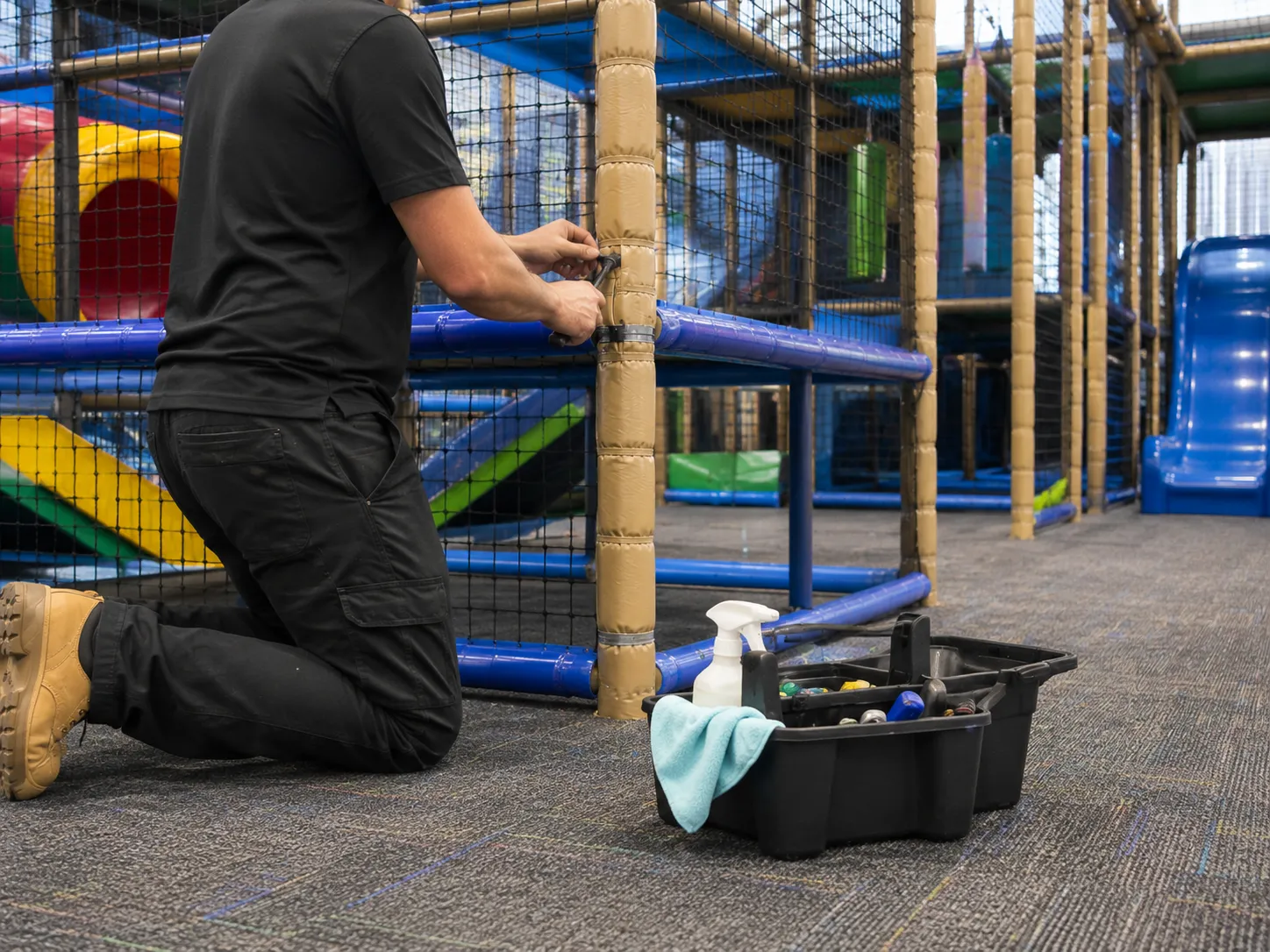
A consistent maintenance programme also helps protect finishes, fixings and high-use components while supporting manufacturer requirements and applicable safety standards. The goal is to identify and address deterioration early rather than waiting for equipment to fail.
Inspect Regularly
Routine inspections help identify problems before they become more serious. Daily checks can identify visible issues while more detailed inspections should assess structural connections, barriers, flooring, anchor points and other safety-critical components.
Addressing loose fasteners, worn connectors or damaged surfaces early can reduce stress on surrounding components and prevent more extensive repairs.
Clean Correctly
Regular cleaning protects playground materials from dirt, body oils, spills and chemicals that can accelerate deterioration. Vinyl, padding and plastic components should be cleaned with manufacturer-approved, non-abrasive products, while steel components should be kept clean and dry to reduce corrosion.
Avoiding harsh chemicals, excessive water and abrasive cleaning tools helps preserve protective coatings, finishes and soft-play materials for longer.
Replace Wear Parts
Some components naturally wear faster than the main structure, including ropes, netting, padding, connectors, clips and protective caps. Replacing these parts when they show wear prevents additional stress from being transferred to surrounding components.
Maintenance records can also help operators identify recurring problems and determine when components typically need attention. Using this information alongside manufacturer guidance and actual usage levels allows maintenance schedules to be adjusted and equipment to remain serviceable for longer.
The lifespan of commercial indoor playground equipment depends on much more than its age. Material quality, structural design, installation, daily usage, environmental conditions, inspections and preventative maintenance all influence how safely and effectively equipment performs. By monitoring these factors and addressing deterioration early, operators can plan repairs, refurbishments and replacements before problems become costly or affect the safety of the play environment.
With the right maintenance approach, well-designed equipment can remain safe, attractive and commercially viable for many years. Playtec can help operators decide about equipment quality, maintenance and future upgrades, supporting a safer and more reliable playground while protecting the value of the overall investment.


.svg)

