

What makes one play panel thrive in a busy public space while another quickly shows wear or fails to hold a child’s attention? In high-traffic environments panels are handled thousands of times each week, exposed to weather, and expected to perform safely without constant intervention. Choosing the right solution is not simply about selecting an appealing design. It requires careful consideration of durability, construction, safety compliance, accessibility and long-term maintenance in real-world conditions.
In this article, Playtec outlines the factors that determine whether a play panel is genuinely suited to demanding public settings. From robust materials and secure fixings to meaningful, inclusive play value and lifecycle performance, each element influences safety, cost and user experience. By understanding these fundamentals, decision-makers can specify panels that withstand intensive use, retain their appearance and deliver reliable play outcomes over time.
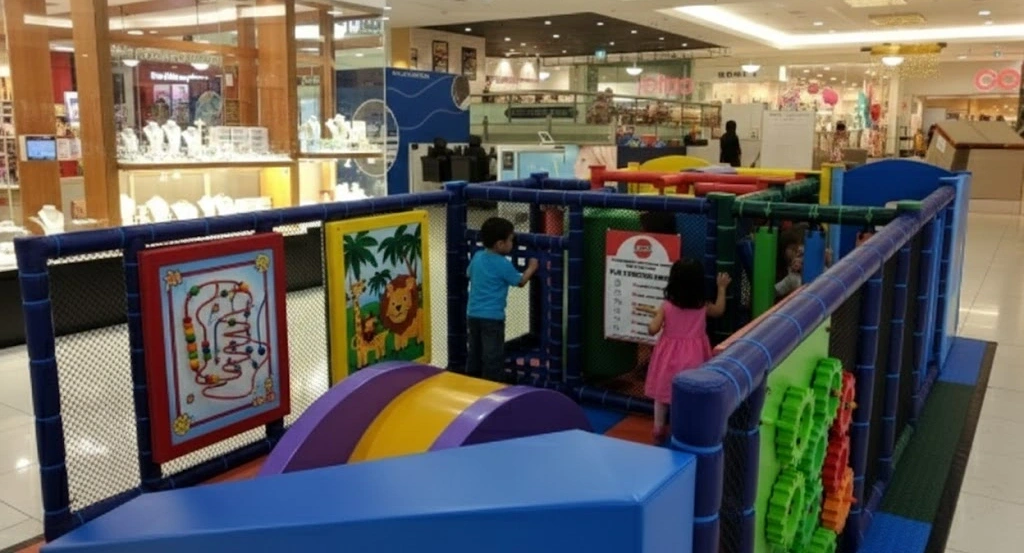
Durability and Vandal Resistance in High-Traffic Settings
In busy public spaces a play panel must cope with constant use, changing weather and occasional misuse. Parents, operators and local authorities want reassurance that panels will stay safe, attractive and functional over many years without constant repairs. Durability and vandal resistance are therefore not optional features but core design requirements.
Playground suppliers in Australia focus on material choices, robust construction methods and smart detailing that limit wear and deter vandalism. Selecting a panel that is built for public environments reduces lifecycle costs, limits downtime and keeps play value high for families who rely on these spaces.
Choosing Materials That Withstand Heavy Use
Material selection is the foundation of a durable panel. In high-traffic settings, playground suppliers in Australia typically specify:
- High-pressure laminate (HPL) or UV-stable HDPE for panel faces
- Galvanised or stainless steel for fixings and structural elements
- Shatter-resistant polycarbonate for viewing windows or lenses
HPL and HDPE do not splinter, rot or absorb water, which is vital in unsupervised outdoor areas. Their colour runs through the sheet, so scratches are far less visible than on painted timber or metal. UV stability prevents fading and brittleness, so panels retain both appearance and structural integrity under sun exposure.
Edges are another weak point in many products. Indoor playground suppliers round panel edges to prevent chipping and delamination. Moisture-resistant cores and sealed edges stop water ingress, which is a common cause of swelling and premature failure in cheaper panels.
Construction That Resists Impact and Tampering
High-traffic environments expose equipment to impacts from running children, bikes and occasional rough treatment. A suitable panel needs a rigid structure that resists flexing and cracking under repeated loads.
Indoor playground suppliers in Australia use reinforced mounting points and appropriate panel thickness for the span involved, which prevents vibration and stress fractures over time. Fixings are typically stainless steel tamper-resistant bolts rather than standard screws. These are harder to remove with basic tools, so panels stay securely attached and components are not easily stolen or dismantled.
Interactive elements such as knobs, sliders and spinners are designed with closed housings and concealed fixings so children can use them freely but cannot access small parts. Over-travel stops and robust bearings prevent components from being forced beyond their intended range, which significantly reduces breakage in unsupervised public use.
Designing Against Vandalism and Graffiti
No public play space is completely free from the risk of vandalism, but design choices can limit both the likelihood and impact. Smooth, low-texture surfaces on indoor playground panels discourage deep scratching and make graffiti easier to clean. Many panel materials accept non-sacrificial anti-graffiti coatings, so paint and marker can be removed without damaging the surface.
Graphics are typically engraved or inlaid into the panel rather than surface printed. Because the image is part of the material, it cannot be easily scraped or peeled away and remains legible even after years of use. Avoiding small detachable accessories and using rounded profiles also reduces opportunities for deliberate damage.
Finally, visibility plays a role in resistance. Panels designed with clear sightlines and open framing are easier to supervise, which naturally discourages vandalism. By combining durable materials, secure fixings and thoughtful detailing, playground suppliers provide play panels that stay safe and appealing even in the most demanding public settings.
Safety Requirements and Public Liability Risks
In high-traffic public spaces a play panel is not just a play feature; it is part of a managed safety system. Local authorities, facility managers and operators will be judged on whether the panel meets recognised safety standards, is installed correctly and is maintained so that foreseeable hazards are controlled.
Australian playground suppliers design play panels so that they support compliance with relevant standards and help reduce public liability exposure. This involves careful attention to impact injury, entrapment, material safety and ongoing inspection so that if an incident occurs, operators can demonstrate that reasonable precautions were taken.
Compliance with Play Standards and Regulations
A suitable play panel for public use must be designed and tested against recognised playground safety standards. In the UK and Europe this typically means BS EN 1176 for playground equipment and BS EN 1177 for surfacing when the panel forms part of a climbing or elevated structure.
Compliance focuses on practical issues such as:
- No sharp edges or protrusions that could cut or puncture skin
- No head, neck or finger entrapment points at joints, windows or moving parts
- Stability and structural integrity under repeated and heavy use
If the panel is accessible to very young children, most playground suppliers also consider early years guidance, which affects height, reach zones and complexity of play features. Where panels are installed indoors, additional fire safety requirements and building regulations may apply, particularly around materials and fixings.
Choosing panels that are independently assessed or designed in line with these standards significantly reduces the risk that an injury will be attributed to defective design.
Materials, Fixings and Vandal Resistance
In high-traffic public environments safety is closely linked to durability. Panels in parks, shopping centres and visitor attractions must tolerate frequent handling, occasional misuse and potential vandalism without becoming hazardous.
Key practical considerations include:
- Impact-resistant panel materials that will not splinter or shatter
- Rounded corners and tamper-resistant caps over any exposed fixings.
- Corrosion-resistant hardware for outdoor or coastal sites
- Concealed or security fixings so parts cannot be easily removed or turned into projectiles.
Trusted playground suppliers specify materials that remain smooth and stable when worn rather than breaking into sharp fragments. This helps operators avoid injury claims arising from long-term degradation of cheaper plastics or timber.
Inspection, Maintenance and Liability Protection
Even the best-designed panel can become unsafe if it is not properly installed and maintained. From a liability perspective, courts often consider whether reasonable inspection and maintenance routines were in place.
For public sites, it is recommended that operators implement:
- Professional installation in accordance with the manufacturer’s instructions
- Inclusion of play panels in daily or weekly visual inspections to check for loose parts, damaged edges or trapped debris
- Periodic detailed inspections to tighten fixings, verify stability and replace worn components with genuine parts
Clear records of inspections, repairs and replacements are essential. They help operators demonstrate that reasonable care has been taken, which can significantly limit public liability exposure if a claim arises. Selecting robust panels with long warranties and readily available spare parts also supports safer lifecycle management and reduces the risk of improvised on-site repairs that could compromise safety.
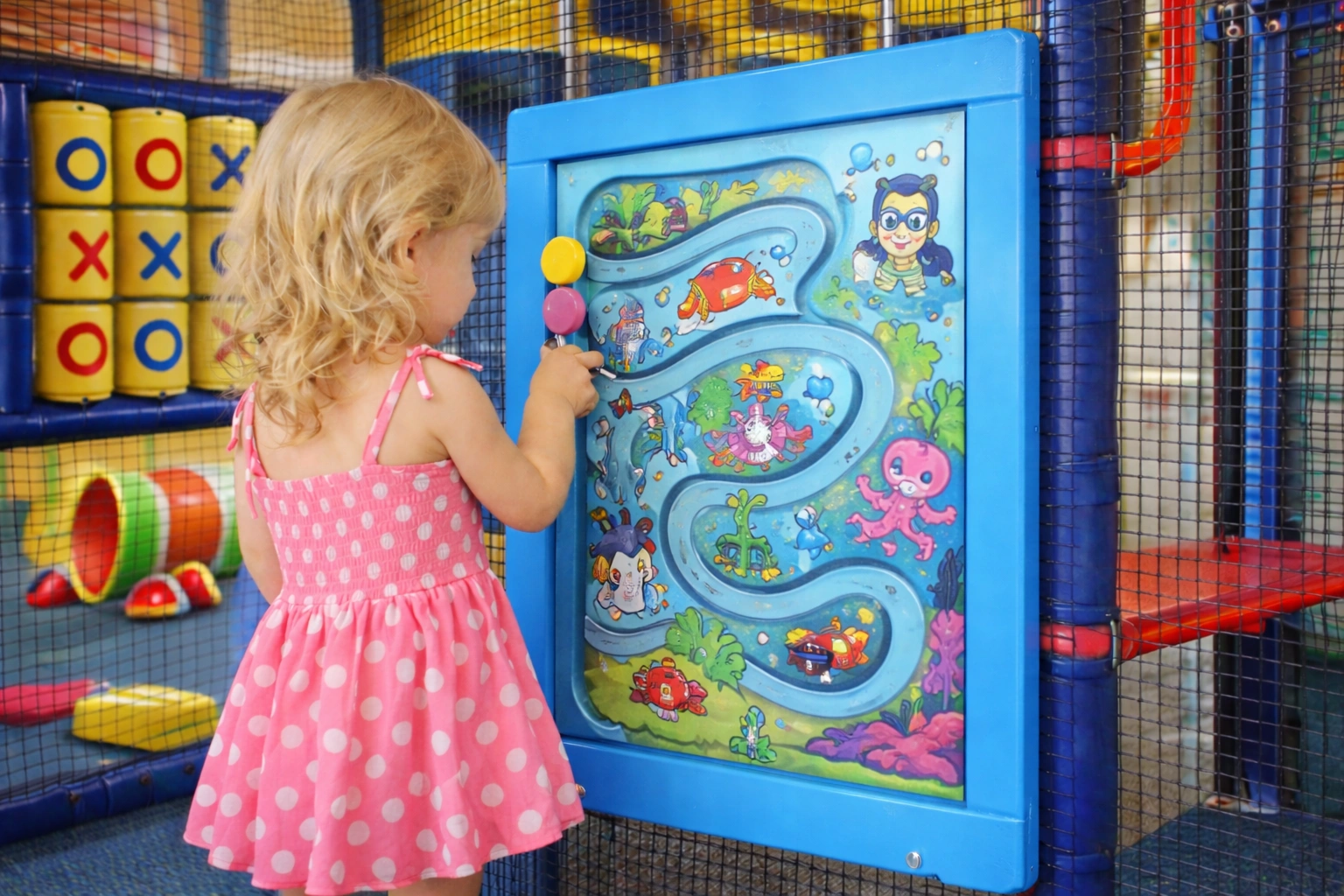
Noise, Congestion and Behavioural Control Through Design
In high-traffic public settings parents, operators and nearby users care as much about noise and crowding as they do about fun. A suitable play panel should actively help to manage sound levels, movement flow and behaviour so the play area feels welcoming rather than chaotic. Good design reduces shrill impact noises, prevents bottlenecks and subtly guides children towards positive cooperative play.
Outdoor playground suppliers focus on panels that absorb sound rather than amplify it, spread children across space and encourage focused interaction. This turns a potentially noisy hotspot into a calmer activity zone that works in busy shopping centres, hospitality venues, health facilities and public attractions.
Reducing Noise at the Source
The quietest play spaces start with the right materials and interaction types. Playground suppliers use robust plastics and composites with inherent sound dampening, so contact between hands and panel produces a duller thud instead of a sharp clack. Metal components are minimised or isolated with bushings and fixings that limit vibration.
Panels that rely on sliding, rotating or tracking elements are significantly quieter than those that use banging, pushing or rapid impact actions. For example, maze sliders, gears, bead tracks and rotating discs encourage deliberate hand movements which generate low continuous sound rather than sudden peaks that disturb nearby users.
Where panels include sound features, indoor playground suppliers design them to be:
- Mechanically limited in volume, such as soft chimes rather than bells.
- Short in duration so sounds do not repeat endlessly
- Directional, so most sound is projected towards the child, not outward into the wider space.
Anti-drumming backing panels or mounting systems can be used on hard walls to prevent the “echo box” effect in corridors and indoor venues.
Preventing Congestion Through Layout and Features
High-traffic environments need panels that keep children moving rather than clustering in one tight spot. Australian outdoor playground suppliers achieve this through both panel content and recommended placement.
Linear or sequence-based activities that encourage a “start here, finish there” flow help reduce bunching. For instance, a set of panels arranged side by side where each offers the next challenge will naturally spread children out. Tall narrow panels leave space around them so children can queue or pass without blocking routes.
Activities with multiple simultaneous play points, such as mirrored puzzles or split tracks, allow several children to share a single panel without conflict. Clear sightlines above and around the panel make it easier for adults and staff to supervise and for children to spot a free activity and move toward it rather than pushing into an already crowded area.
Guiding Positive Behaviour Through Play Design
The right play panel actively encourages social and self-regulated behaviour. Playground suppliers use activities that promote turn-taking, problem-solving and cooperative play over competitive “winner takes all” games that can escalate tensions in busy spaces.
Panels with clear visual cues for turns, such as numbered steps or progressive tasks, help children understand when their interaction starts and finishes. This naturally shortens individual playtime which keeps queues moving. Multi-sided or double-faced panels reduce face-to-face confrontation and allow children to approach from different directions.
Calming visuals and tactile features such as smooth tracks, patterns, textures and slow-moving elements invite focused engagement rather than highly physical rough play. Durable tamper-resistant fixings and enclosed mechanisms prevent misuse, which further reduces frustration and undesirable behaviour around the panel.
Fixings, Maintenance and Long-Term Performance
In a high-traffic public setting even the best-designed play panel will fail if it is poorly fixed or difficult to maintain. The way a panel is attached and the materials used in its fixings directly affect safety, durability and the total cost of ownership over many years. Planned maintenance and smart material choices also minimise downtime and keep the play experience safe and engaging.
Outdoor playground suppliers focus on fixings and lifecycle performance from the outset so operators can rely on panels in schools, parks, shopping centres and family attractions with minimal disruption. Getting these details right is what makes a panel genuinely suitable for demanding public use.
Robust, Vandal-Resistant Fixings
Suitable play panels use tamper-resistant fixings that cannot be loosened with standard tools. Security bolts with pin-in Torx or similar heads are preferred, as they deter casual vandalism and theft. Where panels include moving parts such as spinners or sliders, fixings should be enclosed or capped so children cannot access threads or pinch points.
Corrosion resistance is critical outdoors or in humid locations. Stainless steel or zinc-plated fixings perform far better than basic mild steel, which can rust, stain the panel and weaken over time. Fixings should be specified to suit the substrate, whether timber posts, steel frames or walls, so loads are properly distributed and the panel does not crack at mounting points.
Through-bolting is generally preferable to simple screws wherever possible. Through-bolts with large-diameter washers spread impact loads and reduce the risk of pull-out when panels are heavily used or occasionally misused by older children. All visible fixings should sit flush or be recessed to remove snag hazards and align with recognised playground safety guidance.
Designing for Easy Inspection and Maintenance
In high-traffic locations maintenance teams must be able to inspect and service panels quickly. Good design keeps moving components accessible from the front with minimal disassembly so parts such as bearings, sliders or activity knobs can be checked and replaced without dismantling the full structure.
Most playground suppliers use materials like HDPE panel boards and UV-stable plastics that can be cleaned with mild detergent and water rather than specialist chemicals. Graphics should be engraved or inlaid rather than surface-printed stickers that can peel, fade or harbour dirt. This keeps panels looking fresh with simple cleaning routines and reduces the perception of neglect, which can encourage vandalism.
Standardised components are another advantage. When several play panels on a site share the same fixings and moving parts, maintenance teams can hold a small stock of spares and complete repairs in a single visit. Clear installation and inspection guidance helps operators build regular checks into their normal playground inspection schedule.
Materials and Design for Long-Term Performance
Long-term performance starts with weather- and impact-resistant materials. HDPE is widely used by trusted playground suppliers for its high impact strength, resistance to rot and moisture and its colourfast qualities under UV exposure. Unlike timber, it does not require painting or sealing and will not splinter, which improves both longevity and safety.
Joints and panel edges should be designed to avoid water traps where moisture can sit and promote corrosion or biological growth. Rounded edges and sealed laminates reduce chipping and delamination, especially in exposed coastal or urban sites.
Mechanical elements such as turning discs and gears should use bushings or bearings that resist wear and do not require frequent lubrication, which can attract dirt. Where metal is used, contact between dissimilar metals should be minimised to avoid galvanic corrosion in outdoor conditions.
By combining secure fixings, maintainable design and durable materials, outdoor playground suppliers ensure that play panels keep performing safely and attractively throughout years of intensive public use.
Choosing a play panel for a high-traffic public setting is not just about appearance. It is about long-term performance, safety assurance and practical management. Panels must withstand constant use, changing weather and a wide range of users without becoming unsafe, unsightly or expensive to maintain.
When materials, fixings, compliance, accessibility and play value are considered together, the result is equipment that performs reliably year after year. Durable construction, thoughtful detailing and meaningful play design reduce downtime, limit repair costs and support safe, inclusive engagement.
Well-specified play panels do more than fill a space. They help create environments that remain orderly, attractive and genuinely engaging, supporting both community expectations and operational confidence over the long term.


.svg)

