

Creating a child-friendly waiting area does not have to mean filling the space with baskets of toys, books and loose activities. In many settings, cleanliness, clear walkways and easy supervision are just as important as keeping children occupied. Loose toys can quickly spread across the floor, create trip hazards and become difficult to clean thoroughly between visitors.
Built-in activity features offer a practical alternative. Wall-mounted play panels, carefully positioned seating and well-defined activity zones can give children something engaging to do while helping the waiting area remain organised and easy to maintain.
At Playtec, the focus is on creating play solutions that balance children’s needs with the practical requirements of busy public environments. This article explains how to design a child-friendly waiting area without relying on loose toys, with attention to safety, hygiene, layout and long-term maintenance.
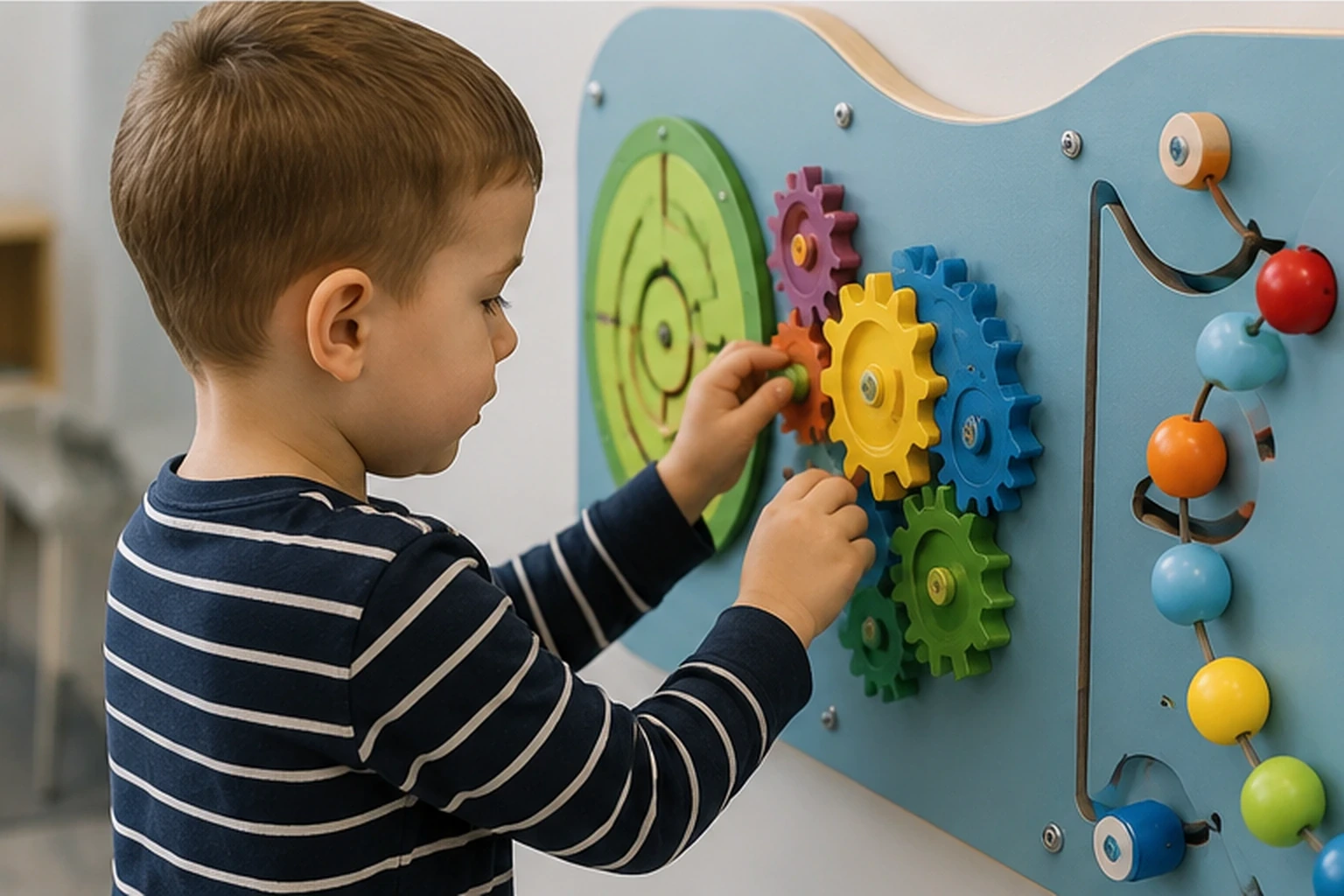
Why Wall-Mounted Play Panels Work Well in Waiting Areas
Wall-mounted play panels provide a practical way to keep children engaged without introducing loose pieces, toy boxes or cluttered floor areas. Securely fixed panels turn unused wall space into an activity zone while leaving the rest of the room available for seating, circulation and everyday operations.
They are particularly useful in waiting rooms because children can begin playing without staff needing to set up activities or pack them away afterwards. A well-positioned panel can create a clear focal point for play while helping the wider environment feel calm and organised.
Keep Walkways Clear
Loose toys often move beyond the area where they were originally placed. Blocks, books and small play items can end up beneath chairs, near entrances or across circulation routes.
Wall-mounted panels keep activities off the floor, helping maintain clear pathways for families, staff and visitors. This is especially important where people may be moving through the space with prams, wheelchairs, mobility aids or bags.
A defined wall-based activity zone can also encourage children to play away from reception desks, doorways and treatment areas that are not suitable for play.
Panels with enclosed moving parts, such as gears, sliders, mazes and bead tracks, reduce the likelihood of pieces becoming lost or scattered across the room. This also helps limit the risk of small components being picked up by younger children.
Make Cleaning and Maintenance Easier
Loose toys can be difficult to manage in shared waiting areas. Items may be handled by multiple children, dropped on the floor or placed in mouths before being returned to a communal basket.
Wall-mounted play panels provide accessible, wipeable surfaces that can be incorporated into routine cleaning schedules. Cleaning methods should follow the manufacturer’s instructions and the organisation’s hygiene procedures, particularly in healthcare settings. The Australian Commission on Safety and Quality in Health Care provides further guidance on the safe management and use of shared toys and play equipment in healthcare settings.
Because the activities remain fixed in place, staff do not need to sort through baskets of toys or check constantly for missing pieces. Panels with enclosed components and accessible surfaces also make it easier to clean high-touch areas effectively.
Use Limited Space More Effectively
Waiting areas often need to accommodate seating, reception desks, circulation routes and access points within a relatively small footprint. Wall-mounted play panels use vertical surfaces rather than floor space, making them suitable for compact rooms and narrow waiting zones.
Panels can be positioned along an available wall without reducing seating capacity or blocking movement. In larger spaces, several panels can be grouped together to create a more substantial activity zone. For more ideas on using vertical space effectively, read our guide to wall-mounted play panels for high-traffic public spaces.
Wall-mounted activities can also support quieter, more focused play. Children can engage individually or in small groups without the noise and movement that often comes with loose toys spread across the floor.
How to Choose Play Panels for Your Space
Choosing suitable play panels involves more than selecting a bright design. The available wall space, age range of visiting children, expected level of use and surrounding layout all affect how well the installation will work.
A carefully planned activity zone should feel like a natural part of the waiting area rather than an addition that disrupts seating, access or supervision.
Consider the Available Wall Space
Begin by assessing the wall area and the surrounding floor space. Identify doors, windows, reception counters, seating, fire equipment and other fixed features before deciding where panels should be installed.
In compact waiting rooms, one or two individual panels may provide enough engagement without making the room feel crowded. Larger spaces may suit a row of panels positioned along one wall or within a dedicated family waiting zone.
Corners and alcoves can also be useful. A small activity area placed away from entrances and busy walkways can help contain play while allowing adults to remain nearby.
Mounting height should suit the intended age group, the type of activity and the layout of the room. Where children of different ages are likely to use the space, panels can be positioned at varied heights so each child can comfortably reach an appropriate activity without climbing on chairs or furniture.
Choose Age-Appropriate Activities
The activities selected should suit the children most likely to visit the waiting area. Younger children often respond well to simple moving elements that support exploration and fine motor skills. These may include bead tracks, sliders, rotating features and tracing paths.
Older children may prefer activities that involve problem-solving, such as mazes, gears or visual puzzles. Including a mix of simpler and more challenging panels can help the waiting area remain engaging for a broader age range.
The type of environment should also guide the selection. In quiet settings such as medical clinics, consulting rooms or offices, activities with smooth, controlled movement are generally more suitable than features that create unnecessary noise.
Healthcare providers can also read our guide to designing developmentally appropriate play panels for paediatric clinics when selecting activities for younger visitors.
Prioritise Durability and Safe Construction
Play panels in public settings may be used repeatedly throughout the day, so they need to withstand frequent handling and regular cleaning.
Choose commercial-grade panels made from durable, child-safe materials. Smooth surfaces, rounded edges and securely enclosed components help simplify maintenance and reduce the risk of damage.
Fixings should be secure and suitable for the wall substrate. Panels need to remain firmly in place under repeated use without loose fittings, protruding hardware or movement at the edges.
Regular checks should be included in the site’s maintenance routine. Inspect panels for loose components, surface damage, sharp edges and any signs of wear that may affect safe use.
Plan a Safe and Easy-to-Maintain Layout
A successful child-friendly waiting area depends on more than the activity panels themselves. Furniture, flooring, sightlines and circulation routes all influence how the space functions.
Planning these details early can help create an area that is engaging for children while remaining practical for staff to clean, supervise and manage.
Keep Circulation Routes Clear
Activity zones should be positioned away from doorways, reception counters and narrow walkways. Children need enough space to stand in front of the panels without blocking access for other visitors.
A shallow wall-based play area can work well because it keeps children close to the activity rather than encouraging play to spread across the room.
Where possible, place the play zone within clear view of nearby seating. Adults should be able to supervise children comfortably without needing to stand in a walkway or move away from their appointment area.
Consider how people enter and leave the room. Avoid locating panels directly beside automatic doors, busy corridors or access points where children may step into the path of other visitors.
Choose Easy-to-Clean Surfaces
Every part of the activity area should be selected with cleaning in mind. Smooth, non-porous surfaces are generally easier to wipe down and maintain than heavily textured finishes or materials with small dirt-catching crevices.
The flooring beneath and around the play zone should also be durable, slip-resistant and easy to clean. The most appropriate material will depend on the setting, particularly where healthcare hygiene requirements apply. Healthcare providers can refer to the RACGP guidance on building design and fit-out for infection prevention and control when planning waiting-room surfaces and finishes.
Furniture should be easy to move for cleaning or positioned so staff can access the floor beneath it. Narrow gaps between benches, walls and panels should be avoided where possible, as they can trap dust, litter and small items.
Maintain Clear Supervision Lines
Children need to be visible while they play. Avoid placing panels behind tall furniture, around blind corners or in areas where staff and carers cannot monitor activity easily.
Seating should be arranged so adults can supervise children from a comfortable position. The play zone should remain separate from staff-only areas and should not interfere with access to reception desks, treatment rooms or service counters.
Good sightlines also make it easier for staff to notice spills, damaged components or other issues that require attention.
Reduce Other Hazards
Children may climb, lean and explore their surroundings while waiting. Furniture should have stable construction and rounded edges, with glass tables and sharp metal corners avoided in areas where children play.
Position activity zones away from power outlets, cords and fixtures that may attract attention. Any electrical, fit-out or access considerations should be addressed during the planning stage.
Storage for prams, bags and coats can also help prevent clutter. Keeping personal items away from walkways makes the area safer and easier to clean.
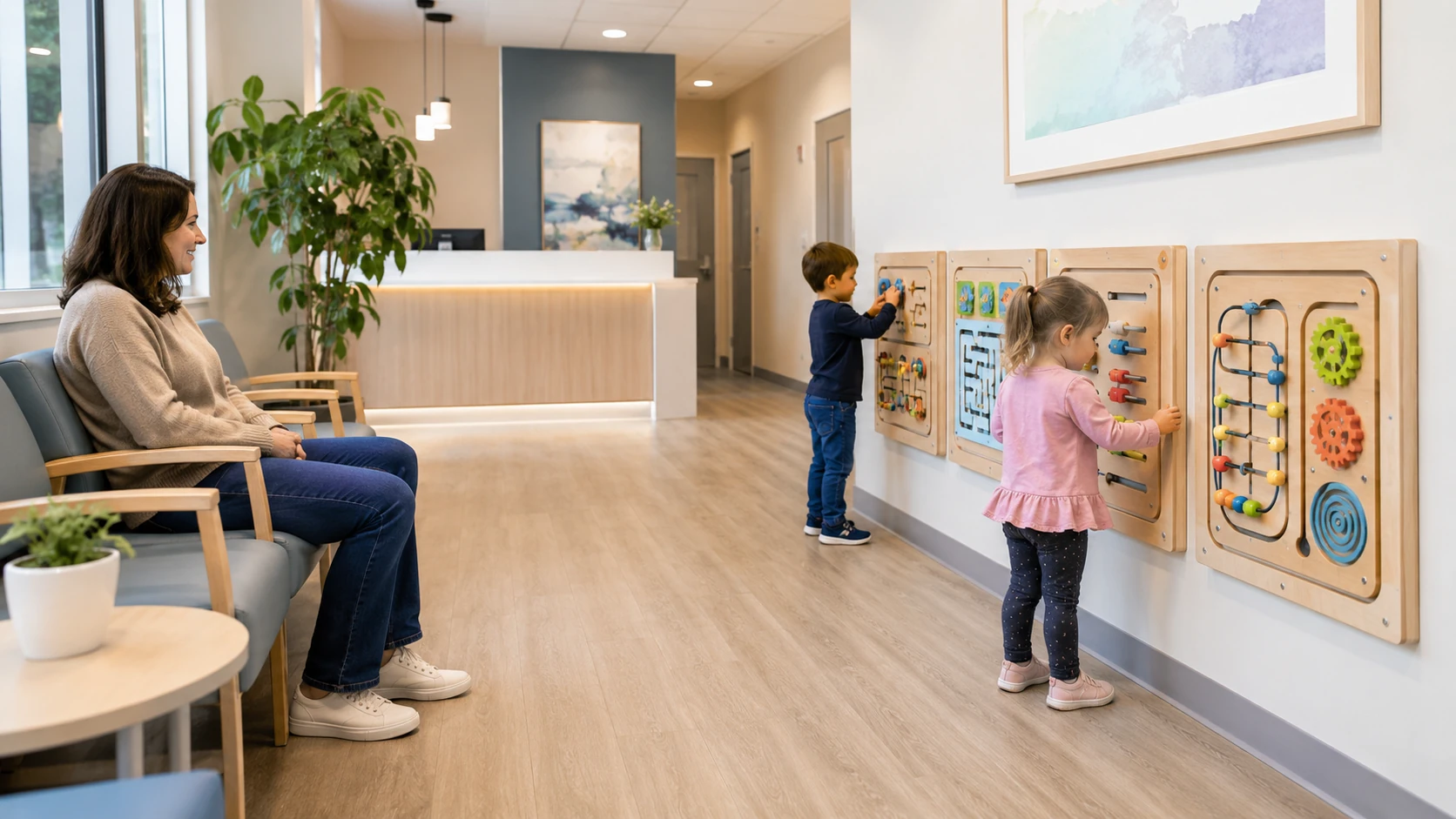
Where Wall-Mounted Play Panels Can Be Used
Wall-mounted play panels suit a wide range of environments where children may need quiet, contained entertainment. Their fixed design makes them particularly practical in shared public settings where hygiene, space and supervision need to be carefully managed.
Healthcare Waiting Rooms
Medical, dental and allied health waiting rooms are common locations for wall-mounted activities. Children may feel restless or anxious before an appointment, and a simple play panel can provide a quiet distraction.
A compact installation near the seating area allows carers to remain close while children play. Because the panels do not contain loose pieces, they are easier to include in regular cleaning routines than baskets of communal toys.
Smaller panels can work well in dental clinics, specialist practices and consulting rooms where space is limited. Larger healthcare facilities may use several activities to create a more defined family waiting zone.
Retail and Service Environments
Retail businesses and service providers can also benefit from fixed activity panels. Opticians, hearing centres, showrooms and customer service areas often need families to remain in the space while appointments, consultations or paperwork are completed.
A wall-mounted activity zone can give children something to focus on without introducing toys that spread into aisles or seating areas.
In larger retail environments, panels can be positioned near customer service desks, consultation spaces or family waiting areas where adults can supervise children easily.
Libraries and Community Centres
Libraries, council offices and community centres often serve families but may have limited storage or staff time available to manage loose toys.
Play panels can be positioned near family seating, information desks or children’s reading areas. They provide a low-maintenance activity without taking over the wider room.
In quieter environments, selecting activities with controlled movement and minimal noise helps the play zone sit comfortably alongside reading, meetings and other public services.
Public Buildings and Transport Settings
Airports, transport hubs and public buildings often have high visitor numbers and limited opportunities to provide loose activities safely.
Wall-mounted panels can be fitted near family seating areas, waiting zones or quieter sections of a public space. Because the activities remain fixed in place, they do not migrate across walkways or create additional work for staff.
The layout should always maintain clear sightlines, avoid busy circulation routes and support straightforward cleaning.
Hospitality and Family-Friendly Venues
Restaurants, cafés and other family-friendly venues may use wall-mounted panels to create a compact children’s activity area without filling the dining space with toys.
A panel installed near family seating can provide a quiet activity while adults wait for meals or finish dining. The fixed format helps prevent pieces from being lost beneath tables or carried into other parts of the venue.
The most suitable placement will depend on the size of the room, traffic flow and the ability of carers to supervise children safely.
Create a More Practical Waiting Area
A child-friendly waiting area does not need to rely on loose toys or cluttered play corners. Wall-mounted play panels provide a simple way to add engaging activities while keeping walkways clear and reducing cleaning and maintenance demands.
The most effective waiting areas combine fixed play features with careful planning. Panel placement, age-appropriate activities, clear supervision lines, durable surfaces and easy-to-clean finishes all contribute to a safer and more practical environment.
By integrating play into the layout rather than treating it as an afterthought, organisations can create a waiting area that helps children feel more comfortable while supporting the everyday needs of staff, carers and visitors.


.svg)

