

Shared environments can quickly shift from calm to overwhelming when children are surrounded by noise, movement, social pressure and constant stimulation. In playgrounds, schools, waiting areas and community spaces, emotional regulation plays an important role in safety, inclusion and positive engagement. Multi-sensory playground panels can provide a practical support tool by giving children a predictable way to pause, focus and reset within the environment.
Playtec discusses how sensory play panels support emotional regulation, why structured sensory input can help children manage busy shared spaces and how thoughtful design and placement can create calmer, more inclusive environments for children with a wide range of needs.
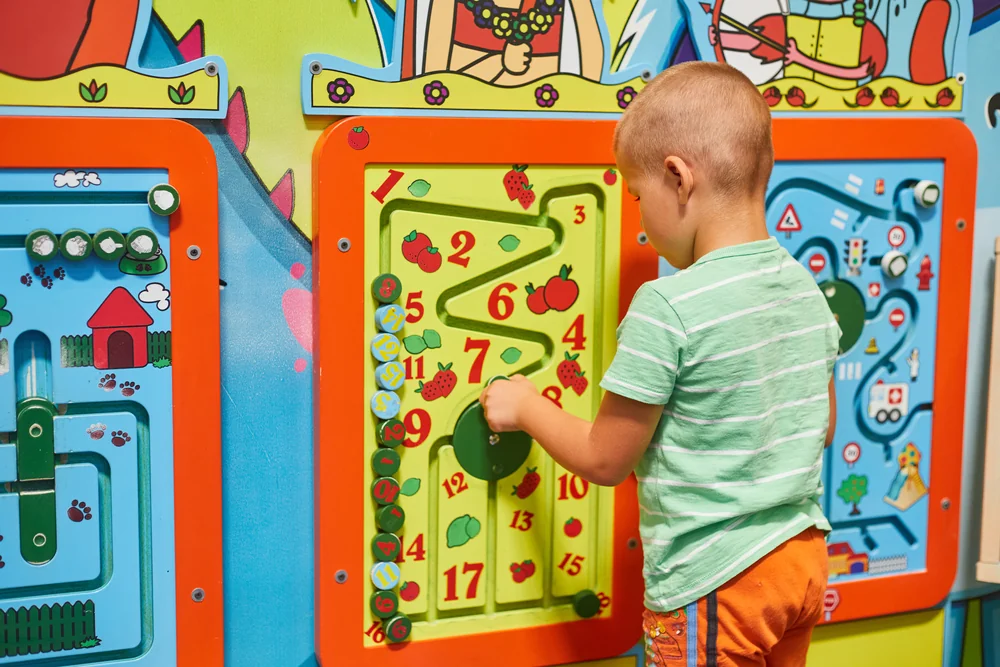
Why Emotional Regulation Can Be Challenging in Shared Spaces
Shared spaces such as playgrounds, school corridors and community centres are full of movement, noise, colour and social interaction. These environments can be exciting, but they can also be overwhelming for children who are still developing the skills needed to recognise, process and manage their emotions.
Emotional regulation becomes harder when sensory input is unpredictable. A child may be coping with background noise, fast-moving peers, bright colours, shifting rules and pressure to join in, all at the same time. Without clear opportunities to pause or engage in a calmer activity, children can quickly become distressed, reactive or withdrawn.
Overwhelming Sensory Input
Busy shared environments often involve competing sounds, bright visual details, varied textures and constant movement. For many children, this level of input can lead to sensory overload. This may appear as crying, shouting, running away, refusing to participate or shutting down completely.
Children with sensory processing differences, autism, ADHD or anxiety may be especially vulnerable to overload, although any child can become overwhelmed in the right conditions. For example, a child trying to join a playground game may also be processing traffic noise, echoing voices, sudden laughter, visual clutter and physical movement around them. When too much information arrives at once, it becomes harder for the brain to filter what matters and stay calm.
Even confident children have limits. Sudden noise, crowding or unexpected contact can quickly shift a child from playful to reactive if there is no familiar activity or sensory anchor to help them settle.
Social Pressure and Unclear Expectations
Shared spaces also bring complex social demands. Children may need to take turns, share equipment, follow rules, negotiate play and manage conflict. For children who are still learning social cues or who find communication challenging, these demands can quickly increase emotional stress.
Unclear expectations can make this harder. A child may not know where running is allowed, how long a turn should last or how to join a group already playing. Confusion and perceived unfairness can lead to frustration, especially when an adult is not immediately available to guide the interaction.
There can also be pressure to participate. A child who feels anxious or overstimulated may still feel expected to join a noisy game because everyone else is involved. This mismatch between how the child feels internally and what the environment seems to demand can make self-regulation much harder.
Limited Access to Calming Opportunities
Many shared spaces are designed mainly for active movement and group participation, with fewer built-in options for quiet focus or self-soothing. When a child feels overwhelmed, there may be nowhere that feels socially acceptable to step back and regroup.
Without defined areas or tools that support calming input, children may rely on less appropriate behaviours to manage their feelings. This can include pacing, shouting, pushing, clinging to adults or avoiding the space altogether.
In busy settings, adults are often focused on supervision, safety and group management. A child may know strategies such as deep breathing, counting or asking for help, but still struggle to use them in the moment. This is where the environment itself can play a valuable role. When calming prompts are built into the space, children have something clear, familiar and accessible to return to.
How Sensory Play Panels Support Calm and Focus
Sensory play panels provide structured, predictable engagement that can help children settle their bodies and attention in busy shared spaces. By offering controlled visual, tactile and sometimes auditory input, they give children a safe outlet for energy, emotion and curiosity.
Rather than adding more stimulation to an already busy environment, well-designed panels help organise sensory input. They create a focused activity that children can return to when they feel anxious, distracted or overstimulated.
Providing Consistent, Predictable Sensory Input
Calm and focus are easier to achieve when sensory experiences are steady and repeatable. Play panels with clear patterns and simple cause-and-effect responses help children anticipate what will happen next. This sense of predictability can reduce anxiety and support emotional regulation.
Panels with sliding tracks, turning cogs, textured surfaces, bead paths or slow-moving visual elements invite children to engage at their own pace. A child can repeat the same action as often as needed, creating a rhythm that feels familiar and manageable.
In shared spaces, consistency is especially valuable. Wall-mounted or freestanding panels stay in the same place and respond in the same way each time. This creates a reliable sensory anchor that children can return to whenever the wider environment feels too noisy, crowded or unpredictable.
Supporting Self-Regulation Through Active Engagement
Calm is not always achieved by asking a dysregulated child to sit still. Many children regulate more effectively through purposeful movement. Sensory panels support this by engaging the hands, eyes and body in contained, meaningful activity.
Spinning discs, turning handles, push-button elements and sliding pieces provide tactile and proprioceptive feedback. Firm pushing, pulling, turning or tracing can have a grounding effect, helping children organise their muscles, attention and emotional state.
These activities also redirect focus away from stressors in the environment. Following a maze with a finger, matching shapes or moving a bead along a track requires concentration without pressure. This type of quiet focus can be especially helpful in corridors, reception areas, waiting rooms and playground edges where children may otherwise struggle to remain settled.
Reducing Overstimulation in Busy Environments
In many shared spaces, the issue is not a lack of stimulation but too much of it. Sensory panels can help create small pockets of calm within larger, more active environments. When positioned carefully, they allow children to step aside briefly without becoming isolated from the group.
Design choices matter. Panels with soft colour contrasts, child-controlled movement and minimal sound are less likely to overstimulate. Interactive features that respond only when touched are often more suitable than panels with constant noise, flashing lights or fast visual effects.
By channelling sensory-seeking behaviour into a structured activity, panels can also reduce disruption for other users of the space. Children have a clear place to focus their energy, while the wider environment becomes calmer and easier to manage.
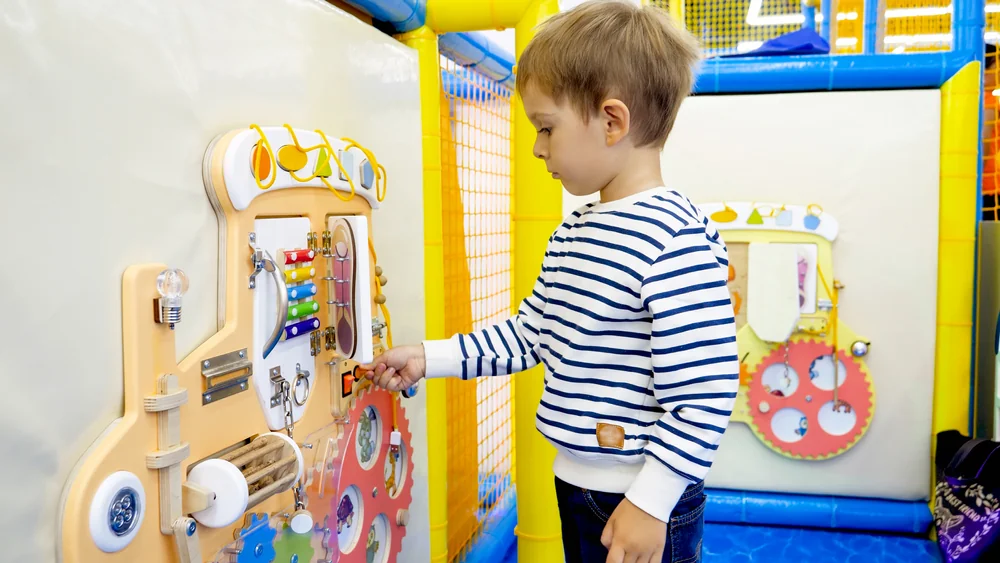
How Play Panels Create Low-Pressure Engagement
Play panels invite children to explore without needing to compete, perform or follow complicated rules. This makes them especially useful in shared spaces where some children may feel anxious, shy, overstimulated or unsure about joining group play.
Instead of asking children to climb higher, run faster or win a game, sensory panels offer a simple invitation to touch, turn, trace, slide, listen and observe. This lowers social pressure and gives children more control over how they engage.
Open-Ended Play Without Performance Pressure
Traditional playground equipment often implies a right way to use it. Children may compare themselves to others or feel pressured to keep up. Sensory play panels are different because they usually support open-ended exploration.
A child can spin a wheel, trace a maze, move a slider, match shapes or repeat a favourite motion without needing to complete a task in a specific way. There is no score, timer or winner. This allows children to focus on how the activity feels rather than how they are performing.
This can be particularly helpful for children who find group games, loud play or physically demanding equipment stressful. They can still participate in the shared environment, but in a way that feels manageable.
Predictable Feedback That Builds Confidence
Sensory regulation is closely linked to predictability. Play panels provide clear cause-and-effect feedback. A wheel turns, a bead moves, a surface changes texture or a sound occurs only when a child activates it. The response is immediate and understandable.
This gives children a sense of control in a space that may otherwise feel unpredictable. They can experiment with movement, speed, pressure and sequence while remaining within a small and contained activity area.
Small, repeated successes also build confidence. A child who is hesitant to join a group may first engage with a familiar panel, settle their emotions and then feel more ready to participate. In this way, sensory panels can act as a bridge between withdrawal and social engagement.
Where Sensory Play Panels Work Best in Shared Environments
Sensory play panels are most effective in spaces where children experience high stimulation, frequent transitions or long waiting times. The right location allows children to access calming input without blocking movement, creating safety risks or distracting others.
Placement should consider flow, supervision, noise levels and the purpose of the space. The goal is to create accessible regulation points that feel integrated rather than separate or hidden away.
Early Years Settings and Schools
In nurseries, preschools and primary schools, sensory panels work well in corridors, breakout areas, cloakroom zones, quiet corners and nurture spaces. These are areas where children often experience stress during transitions, waiting periods or changes in routine.
Wall-mounted panels along a corridor can provide calming input for children who find moving between classrooms difficult. Panels near reading corners or quiet spaces can create a predictable reset point before returning to learning. In early years rooms, lower-height panels can be placed near role-play, construction or sensory areas where open-ended exploration is already part of the environment.
Highly stimulating panels should not be placed directly beside whole-class teaching areas, as they may become distracting. Instead, they are often most effective when used to define small self-regulation spaces with clear expectations and visual cues.
Health, Community and Public Waiting Areas
Healthcare and public service environments often involve long periods of waiting, which can quickly lead to restlessness, anxiety or dysregulation. Sensory play panels can give children a focused activity while they wait, helping reduce stress without relying solely on screens or constant adult distraction.
In these settings, panels should be visible from main seating areas so carers can supervise easily. They should also be positioned slightly away from busy routes, reception desks and entrances to avoid congestion.
Quiet tactile panels, gentle visual tracking activities and simple mechanical movement are usually better suited to waiting areas than loud sound-based features. In libraries and community hubs, panels can be integrated into children’s corners, feature walls or soft seating areas to support calm engagement during story time, workshops or group sessions.
Playgrounds, Indoor Play and Inclusive Public Spaces
In playgrounds and indoor play facilities, sensory panels support children who may find open, noisy environments challenging. They work particularly well along perimeter fencing, beside building walls, near inclusive play equipment or in quieter side zones of a larger play area.
Positioning panels slightly away from the busiest equipment creates a natural retreat point without separating children from their peers. This is important for inclusion. Children can pause, regulate and rejoin play when they feel ready, rather than being removed from the environment altogether.
Outdoor panels should be durable, weather-resistant and easy to clean. Tactile features, simple visual patterns and child-controlled movement are often especially effective outdoors, where background sound levels may already be high.
What to Look for When Choosing Sensory Play Panels
Selecting sensory play panels for shared environments requires more than choosing colourful equipment. The right panels should support emotional regulation, suit the needs of different users and remain safe, durable and easy to maintain over time.
The best panels balance engagement with calm. They should invite curiosity without creating unnecessary noise, visual clutter or frustration.
Prioritise Calming Sensory Inputs
For emotional regulation, sensory input should be purposeful rather than excessive. Visual features should avoid rapid flashing lights, overly bright colour combinations or fast movement. Gentle colour contrasts, clear patterns and child-controlled visual elements are usually more effective.
Auditory features should be soft, optional and activated by the child. Quiet clicks, chimes or gentle mechanical sounds are generally more suitable than constant music or loud effects.
Tactile input should include a range of smooth, ridged and lightly textured surfaces. Harsh, sharp or irritating textures should be avoided. Activities involving slow, rhythmic movement, such as tracing paths, rotating discs or moving sliders, can naturally support self-soothing.
Ensure Safety, Durability and Easy Maintenance
Shared settings require strong construction and simple cleaning routines. Panels should be made from durable materials such as marine-grade plywood, impact-resistant plastics and rust-resistant metals. Rounded edges, tamper-resistant fixings and secure moving parts are essential.
Any components that move should be designed to prevent trapped fingers. Small removable parts should be avoided, particularly in early years and public settings.
Surfaces should be non-porous where possible and compatible with standard cleaning products used in schools, healthcare settings and community facilities. Fully enclosed spinners, sealed bead tracks and flush-mounted features are often easier to clean and more suitable for high-use environments.
Support a Range of Ages and Abilities
Children regulate in different ways, so sensory panels should be inclusive from the beginning. Panels should offer activities that can be used at different levels, from simple cause-and-effect interactions for younger children to more complex sequencing, matching or problem-solving tasks for older users.
Height and reach are also important. A combination of lower and mid-height panels, or modular systems, can support children using wheelchairs, walkers or support frames. Handles, sliders, knobs and buttons should be easy to grip for children with different levels of fine motor control.
The most effective panels also support social regulation. Features that allow side-by-side play, turn-taking or quiet shared exploration can help children practise communication and cooperation in a low-pressure way.
Creating Calmer and More Inclusive Shared Spaces
Sensory play panels can make shared environments more manageable for children who experience sensory overload, anxiety, communication challenges or difficulty with transitions. By providing structured, predictable and engaging sensory input, they offer children a practical way to pause, focus and reset without leaving the space completely.
Their value lies in thoughtful design and placement. Panels that are calming, durable, accessible and easy to use can support emotional regulation while also improving the overall flow and atmosphere of busy environments. For educators, clinicians, playground designers and facility managers, sensory play panels provide a considered way to support inclusion, wellbeing and participation for children with a wide range of needs.


.svg)

