

Interactive playground panels can turn a play space into more than a colourful outdoor area. With the right play panels, children are encouraged to see, hear, touch, move, problem-solve and communicate in ways that support sensory development and inclusive play. These features help create structured sensory experiences that feel enjoyable while still supporting important developmental skills.
Playtec explores how interactive panels stimulate multiple senses, encourage problem-solving and communication and support children with a wide range of abilities and developmental needs. Thoughtful design choices can help playgrounds become more engaging, accessible and meaningful for children who learn and play in different ways.
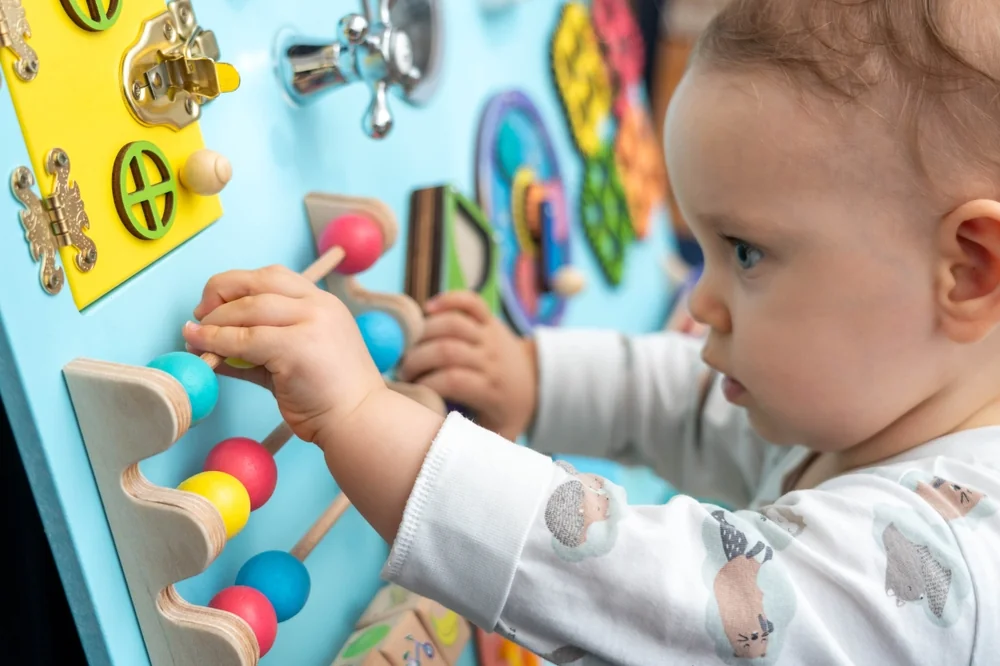
What Sensory Development Means in Play
Sensory development in play refers to how children use touch, sight, sound, movement, balance and body awareness to understand the world around them. When a playground supports these senses in a structured but playful way, children build the foundations for focus, coordination, language, emotional regulation and confidence.
This is not an abstract concept. Every time a child turns a panel dial, follows a visual pattern, presses a sound button or traces a textured surface, the brain is learning how to process information more efficiently. Well-designed interactive panels turn everyday exploration into purposeful sensory practice without making play feel forced or instructional.
The Core Senses Involved in Play
Most people think of the five basic senses, but playground play often involves more. Interactive equipment can be designed to stimulate several sensory systems at once, including:
- Visual input through colour contrast, patterns, lights and movement
- Auditory input through chimes, clicks, drums and sound sequences
- Tactile input through raised shapes, grooves, knobs and varied materials
- Vestibular input through head movement, body turning and changes in position
- Proprioceptive input through pushing, pulling, turning and resistance-based features
These sensory experiences help children learn how to filter important information from background distractions. For example, following a light-up trail on a panel supports visual tracking, while turning a wheel with gentle resistance helps children develop body awareness and smoother motor control.
How Sensory Processing Supports Everyday Skills
Sensory processing is the way the nervous system receives, interprets and responds to information. Children who regularly engage in rich, multi-sensory play often have more opportunities to practise attention, planning, self-control and problem-solving.
Interactive panels support this by offering predictable cause and effect. When a child presses a button and hears a tone, moves a slider and sees a result or turns a handle and feels resistance, they begin to understand how their actions influence the environment.
These experiences can translate into everyday skills. A child matching sounds to symbols on a panel is practising sensory discrimination that can support early literacy. A child controlling the pressure used to turn a crank is developing the same type of hand control needed for writing, dressing and using tools.
How Interactive Playground Panels Engage Different Senses
Interactive playground panels are designed to invite children to touch, listen, watch and move. By combining texture, sound, movement and visual problem-solving, they provide sensory input that supports both enjoyment and development.
The best panels do not rely on overwhelming noise or excessive colour. Instead, they focus stimulation in clear, purposeful ways. This allows children to explore, repeat actions and build confidence as they learn how their bodies and the environment work together.
Tactile Engagement Through Touch and Movement
Tactile play is central to sensory development, and interactive panels make touch a natural part of play. Raised patterns, grooves, ridges and knobs encourage children to run their fingers across surfaces and compare different textures. Spinners, sliders and rotating discs require pushing, pulling or twisting, helping build strength and coordination in small hand muscles.
Panels may include smooth and rough surfaces placed side by side, movable pieces that click into place or features that offer slight resistance. These details help children understand pressure, movement and texture in a practical way.
As children trace shapes, follow finger mazes or turn gears, they practise hand control and refine grip patterns. These actions can support later skills such as handwriting, fastening clothing and using everyday tools.
Auditory Stimulation With Controlled Sound
Sound-based panels turn simple actions into immediate feedback. Chimes, drums, talk tubes, clickers and musical panels respond when children press, tap or spin. This clear connection between action and sound strengthens cause-and-effect understanding and encourages experimentation.
Controlled sound is important. Good sensory panels use short, clear tones or clicks rather than constant noise. This makes the experience easier to manage, especially for children who are sensitive to sound.
Listening for differences in pitch, rhythm and volume can support auditory discrimination, which is important for language development and classroom listening. Children may copy rhythms, take turns making sounds or create simple patterns together, introducing early musical and communication skills through play.
Visual and Cognitive Sensory Engagement
Many interactive panels use bold colours, clear icons and simple patterns to attract visual attention. High-contrast designs can help children with different visual abilities locate key features and follow movement. Rotating discs, matching games and pattern-based panels encourage visual scanning, focus and hand-eye coordination.
Visual play is also linked to cognitive development. When children slide pieces into place, sequence images or solve simple panel-based puzzles, they practise memory, planning and spatial awareness. Repeating these activities helps the brain process visual information more efficiently, supporting reading readiness, problem-solving and navigation in busy environments.
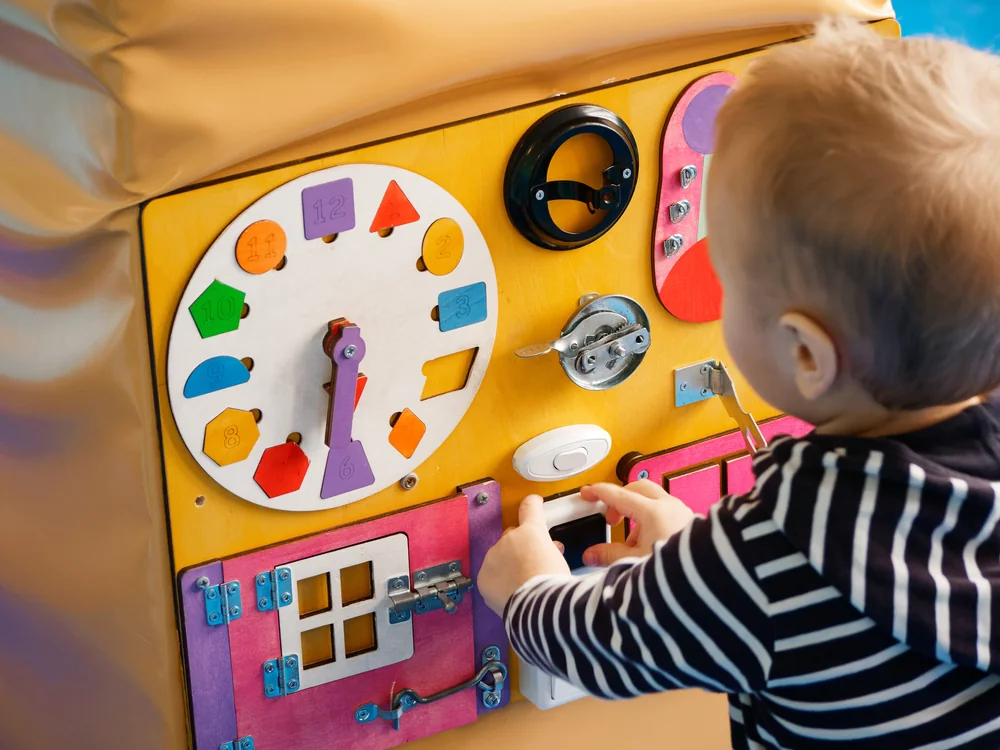
Why Sensory-Focused Play Matters for Children
Sensory-focused play is more than a playground trend. It helps children understand their surroundings, organise their thoughts and respond appropriately to different situations. Through touch, sound, sight and movement, children build skills that support learning, confidence and emotional wellbeing.
Modern playground design recognises that sensory experiences should be intentional. Interactive panels that invite pushing, spinning, listening, tracking and problem-solving help children practise processing information from multiple senses at once. This can support learning both inside and outside the classroom.
Supporting Motor Development and Body Awareness
Sensory play is closely connected to fine and gross motor development. Interactive panels encourage repeated small movements such as turning knobs, sliding counters, pressing buttons and moving pieces along tracks. These actions strengthen the hands and fingers while improving dexterity and coordination.
Body awareness also develops through sensory-focused activities. When children push against resistance, stretch to reach a feature or coordinate both hands at once, they receive feedback from muscles and joints. This proprioceptive input helps them judge how much force to use when lifting, carrying, drawing, climbing or playing with others.
Panel-based activities can also support bilateral coordination, where both sides of the body work together. This is important for everyday tasks such as cutting with scissors, tying shoelaces, catching, throwing and using classroom tools.
Nurturing Emotional Regulation
Sensory-rich play can help children manage stress, energy levels and emotions. Repetitive actions such as spinning wheels, sliding beads or tracing paths can have a calming effect, while brighter and more active features can gently energise children who need more stimulation.
When a playground offers a variety of sensory options, children can choose the type of input that suits them in the moment. This supports self-regulation, allowing children to settle, refocus or re-engage with play in a way that feels manageable.
This is particularly valuable for children with sensory processing differences, autism, ADHD or developmental delays. Predictable sensory feedback can help them participate more comfortably in group play while still giving them control over how they engage.
How Interactive Panels Support Inclusive Play
Interactive playground panels help create play spaces where children of different abilities can participate alongside one another. Because many panels are low-height and do not rely only on climbing, running or balancing, they provide meaningful play opportunities for children with physical, sensory or cognitive differences.
Thoughtful panel selection can bridge gaps between children who move, communicate or process information differently. When sound, texture, movement and visual cues are presented in accessible ways, children can choose how to engage while still sharing the same play environment.
Reducing Physical Barriers
Traditional playground equipment often favours children who can climb, run and balance with ease. Interactive panels shift some of the focus to fine motor, sensory and problem-solving play that can be accessed from a seated or standing position.
Low-level panels can be installed along accessible surfacing so children using wheelchairs or walking aids can approach directly. Large handles, wide sliders and easy-grip controls support children with limited hand strength or coordination.
Because many panels provide satisfying feedback with small movements, children who cannot manage large gross motor actions can still experience control and achievement. This helps reduce frustration and keeps mixed-ability groups playing in the same area.
Supporting Sensory and Communication Differences
Inclusive play depends on sensory access as well as physical access. Interactive panels can be selected to either stimulate or calm, depending on the needs of the space and the children using it.
Tactile panels with raised paths, textures and shapes can support children with visual impairments. High-contrast colours and clear icons can help children with low vision or processing difficulties. Predictable cause-and-effect features, such as pressing a button to hear a sound, can be helpful for autistic children or children with learning differences.
Sound and music panels also encourage non-verbal interaction. Children can share rhythms, copy patterns or take turns triggering effects without needing complex language. This gives children more ways to communicate and participate.
Encouraging Shared Play and Social Interaction
Inclusive equipment should invite children to play together, not just near each other. Many interactive panels are designed for more than one user, which naturally encourages cooperation and communication.
Panels with multiple controls or stations allow children to work together to complete a task, such as aligning shapes, moving a ball through a maze or creating a sound pattern. Turn-taking features help children practise patience, shared attention and social awareness.
Because panels are often positioned at the edge of larger play structures, they can become natural meeting points. A child who is unsure about climbing can still join in by controlling sounds, visuals or movement for a friend nearby. In this way, interactive panels act as social connectors within the playground.
What to Look for in Sensory-Focused Playground Panels
Selecting sensory-focused playground panels is about more than adding colour or novelty. The right panels should provide purposeful sensory input, encourage repeated engagement and suit children with different abilities, ages and sensory preferences.
Design, materials, placement and accessibility all matter. A panel should be durable and safe, but it should also offer enough sensory value to remain interesting over time.
Variety of Sensory Inputs
Effective sensory panels provide a mix of tactile, visual and auditory experiences. This allows children to explore in different ways and at their own pace.
Tactile features may include raised patterns, textured tracks, knobs, sliders and movable pieces. Visual elements may include high-contrast graphics, mirrors, rotating discs and clear shapes. Auditory features may include chimes, clicking gears or sound-making components that respond to child-led actions.
A balanced mix is important. Too much stimulation can overwhelm some children, while too little may fail to hold attention. The strongest playground designs include both calming and active sensory options.
Inclusive Design and Accessibility
Panels should be usable by children with a wide range of abilities. Height and reach are especially important. Panels with multiple access points or varied levels allow children using wheelchairs, walkers or mobility aids to participate alongside standing children.
Controls should be easy to grasp and move. Large knobs, wide sliders and levers with clear resistance help children succeed without unnecessary frustration. Where instructions, symbols or sequences are included, they should be simple, clear and not dependent on advanced reading skills.
Inclusive panels should also support different sensory preferences. Some children may seek bright colours, movement and sound, while others may prefer slower, quieter or more tactile features. A good layout provides choice.
Durability, Safety and Practicality
Outdoor sensory panels need to withstand heavy use, weather exposure and regular cleaning without losing their function or sensory appeal. Robust materials such as high-pressure laminate, UV-stable plastics and rust-resistant metals help keep panels safe and long-lasting.
All edges, fixings and moving parts should be designed with safety in mind. Small components should be securely contained so they cannot be removed, swallowed or damaged. Rounded edges, recessed fixings and smooth movement all help reduce risk during everyday use.
Maintenance should also be considered. Panels that are easy to wipe clean, resist dirt traps and have accessible replacement parts are more practical for schools, parks, childcare centres and public play spaces.
Interactive playground panels extend far beyond decoration. They support sensory development, motor skills, emotional regulation, communication and inclusive play through purposeful tactile, auditory and visual experiences. When chosen carefully, play panels can help children explore, problem-solve and participate in ways that suit their individual needs.
Well-designed installations should balance sensory value with accessibility, safety, durability and long-term practicality. As expectations for inclusive and developmentally rich playgrounds continue to grow, interactive panels will remain an important part of creating play spaces where all children can engage, learn and feel confident.


.svg)

