

Designing a playground in a small area is a very different challenge to filling a large open space. Every square metre has to work hard not just to look good in a site plan, but to keep children genuinely engaged, moving and safe over time. In compact spaces, the wrong equipment choice can quickly make an area feel cramped, underused or even unsafe, while the right mix can transform a modest footprint into a highly functional, high-impact play environment that feels bigger than it is. This article is written with that reality in mind: helping you make smart, evidence-based decisions about what to include, what to leave out and how to get real value from a smaller site.
We’ll start by looking at what small play areas really need and just as importantly, what they don’t. From there, we’ll step through the best playground equipment options for small areas, focusing on pieces that support multiple types of play, cater to a wide age range and are practical in Australian conditions. We’ll also unpack the common traps to avoid, including bulky “hero” items that look impressive in photos but don’t perform well in tight spaces. Finally, we’ll cover how to choose equipment, layouts and surfacing that make a confined space feel more open, navigable and inviting, so you end up with a playground that works for your site, your budget and your community for years to come.
What Small Play Areas Really Need (And What They Don’t)
The smaller the space, the more ruthless you have to be about what earns its place on the floor. In a compact play area, every square metre has to work hard for play value, safety, flow and maintenance. Over the years, I have found that good small spaces have a few things in common, and so do the bad ones.
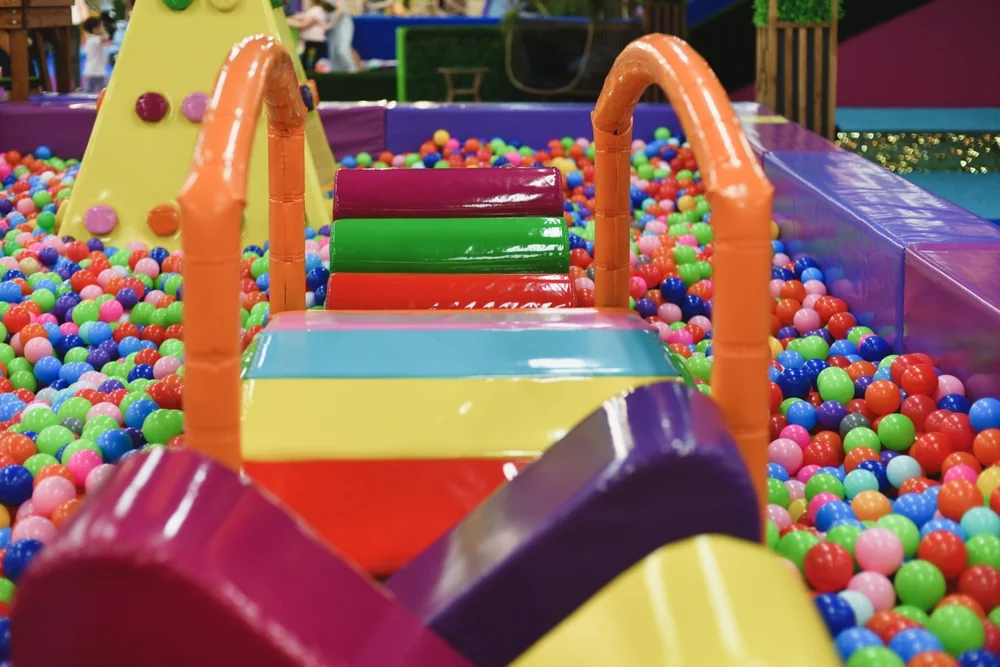
What They Really Need
First, small play areas need clear purpose. Are you catering mainly to toddlers, school-aged children, or a mix? A tiny space cannot do everything well. In many Australian venues, the most effective small areas focus on early childhood, because younger children stay closer to carers and use equipment more intensively. Once the age group is clear, equipment choices become much sharper.
They need multi-functional equipment rather than single-purpose novelties. A compact climbing unit with different routes, a slide and a crawl-through space will be used far more than a standalone slide or a single climbing frame. The goal is to layer play experiences climbing, balancing, social interaction and imaginary play into the same footprint. In a small area, one well-designed feature that invites repeat use is worth more than several separate items that each do only one thing.
Small spaces also need open sightlines. Carers must be able to see children from seating areas without having to move constantly. That means avoiding tall, bulky structures that block views and instead using lower-profile pieces and transparent or open panels. When adults feel confident about supervision, they stay longer, spend more and are more likely to return.
Circulation matters more than people expect. Children need clear paths to enter and exit play elements without bottlenecks or blind corners. In small Australian venues I have seen, the best layouts create a natural loop: children move in one direction through climbing, sliding and imaginative zones and re-join the start without cutting across other play or seating areas. This reduces collisions and makes the space feel calmer, even at busy times.
From a business perspective, small play areas also need durable, low-maintenance materials. High-traffic, confined spaces show wear quickly. Choosing commercial-grade equipment, resilient safety surfacing suited to local climate and easy-to-clean finishes pays off. Cleaning in tight spaces must be quick and thorough; if it is hard to reach, it will end up neglected.
What They Don’t Need
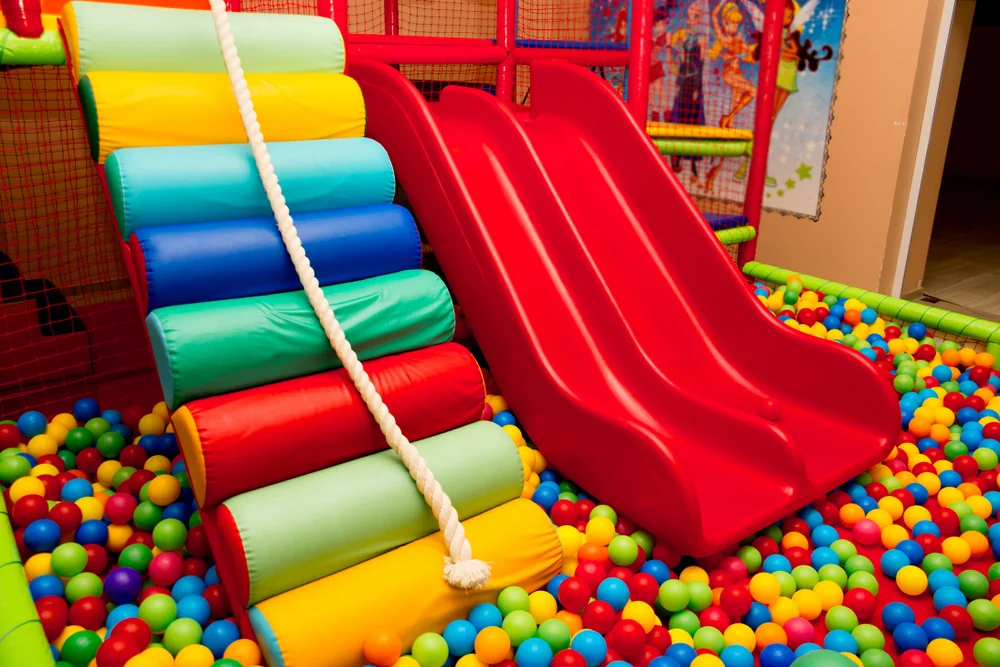
What small play areas absolutely do not need is clutter. Filling every spare corner with equipment, loose toys or decorative props is tempting, but it shortens the usable life of the space. Children need room to move, negotiate and play together. Too many pieces create trip hazards, cleaning headaches and visual chaos.
They do not need oversized “hero” items that dominate the footprint but offer limited play value. A big, impressive piece might photograph well, yet if it can only be used one way or by a narrow age range, it will sit empty while children crowd into whatever is left. In a compact space, scale is critical: equipment should look inviting without overwhelming the room.
Finally, small areas do not need fragile themes that date quickly or require constant replacement. Overly specific branding, licensed characters or trendy colour schemes can lock you in. A flexible, timeless base with subtle theming allows you to refresh around it without ripping everything out when fashions change or when you re-position your business.
The Best Playground Equipment for Small Areas
When space is at a premium, every millimetre has to work harder. In compact sites I look for equipment that offers multiple types of play in a tight footprint, has long-term durability and still feels generous and inviting to children. The goal is always maximum play value per square metre.
Modular Multi-Play Structures
For small areas, a well-designed modular multi-play unit usually forms the backbone of the space. Instead of separate standalone items, I prefer one structure that combines climbing, sliding, balancing and imaginative play. In a small footprint, a good unit will stack activities vertically, using height rather than spread. Platforms at different levels, linked by ladders, rock walls, nets or arched climbers, keep children moving without needing much ground area.
Choosing the right configuration matters. I prioritise slightly smaller slides that descend close to the structure to save room while still feeling exciting. I also look for built-in play panels, steering wheels, windows, noughts-and-crosses or musical elements integrated into the sides, because these activate otherwise “dead” spaces and create quiet play opportunities for younger or less confident children. For Australian conditions, I always pay attention to shade options and heat-resistant materials, so the unit remains usable year-round.
Climbing and Balancing Equipment
Climbing frames and balance challenges are ideal when the footprint is tight, because they offer strong physical play without needing much surfacing area. Compact rope climbers, overhead ladders and net cubes can often be positioned along a boundary line or in a corner while still feeling adventurous. The same square metre of space can deliver upper-body development, coordination, risk assessment skills and social interaction as children work out routes together.
Balance beams, stepping pods and wobble bridges are particularly efficient in narrow or awkward spaces. A simple zig-zag beam or a sequence of low steppers can turn a circulation path into a play journey. By keeping many of these elements at low height, I can minimise fall zones, which reduces the overall area of impact surfacing required. This is a major advantage when trying to keep a small site both compliant and cost-effective.
Swings, Spinners and Motion Play
Motion-based equipment brings a sense of excitement that children naturally gravitate towards, and there are now far more options than the traditional swing bay. On tight sites, I often favour compact spinners or rotating bowls, because they offer vestibular stimulation and social play in a concentrated space. These can usually accommodate one or several children at once without demanding a large safety envelope.
When a swing is non-negotiable, I look at single-bay, multi-user options that combine different seat styles, such as a toddler seat opposite a flat seat, or a group swing that supports several children together. This approach keeps the swing footprint small while appealing to a wide age range. I also pay close attention to how motion equipment will interact with surrounding paths and gathering areas, making sure there is enough clearance for safe movement without sacrificing too much of the usable play space.
Over-Sized “Hero” Structures That Dominate the Space
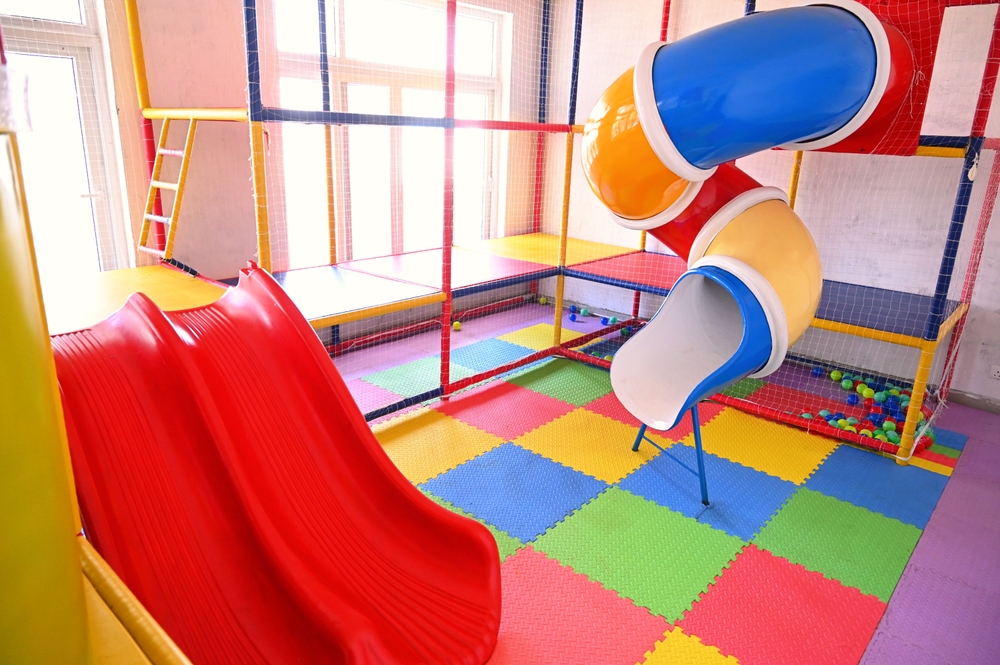
In a compact playground, one large tower or multi-deck unit can look impressive on a plan, yet leave children with very few real play options. When a single structure consumes most of the footprint, circulation space, fall zones and access areas quickly erode what’s left of the site. The result is a visually striking centrepiece that feels crowded in use, queues easily form on platforms and slides and children end up repeating the same linear play journey rather than exploring.
In Australian conditions, large elevated structures in tight spaces can also become heat traps, with limited airflow and heavily concentrated activity in one sun-exposed zone. For small areas, it is usually more effective to avoid any one item that dictates the whole layout or forces every age group to converge in the same spot.
Equipment with Large Fall Zones and Complex Clearances
Some items look compact in catalogue images but require surprisingly large impact and clearance zones to comply with Australian Standards. Traditional swings with long chains, high-speed spinners, large cable rides and some overhead carousels often fall into this category. On a small site, these invisible safety envelopes can overlap pathways, fencing, or other equipment, forcing awkward compromises or non-compliant layouts.
Trying to squeeze these products into tight corners often leads to dead space around them that cannot be used for anything else. When planning a small playground, it is wiser to avoid equipment whose safety or circulation zones are significantly larger than the actual footprint of the unit. The goal is to preserve as much usable play surface as possible, rather than surrendering half the site to one item that only a few children can use at once.
Highly Age-Specific or Single-Use Items
In limited space, ultra-specialised equipment that only suits a narrow age band or a single type of play is rarely a good investment. Very tall climbing nets aimed only at older children, or themed pods that toddlers quickly outgrow, can leave large portions of the playground under-used at different times of day.
The same issue appears with equipment that only delivers one brief, high-intensity experience, such as a very fast slide with no complementary climbing, balancing or imaginative elements nearby. Once children have “had a turn”, there is little reason to stay engaged in that corner, and the space does not support varied or longer play sessions. In a small area, every item needs to carry its weight by offering multiple ways to play and overlapping age suitability.
Cluttered Layouts and Visual Barriers
In an effort to “fit more in”, there is a temptation to pack small sites with lots of separate pieces, narrow pathways and decorative elements. This cluttered approach often reduces functionality. Children have limited room to run, carers struggle to supervise across visual barriers and the space can feel chaotic rather than inviting.
Tall, opaque panels, dense planting at ground level and solid fencing immediately around active play zones can all interrupt sightlines. In a small Australian community or education setting, being able to see across the entire playground at a glance is critical for safety, behaviour management and general comfort. Avoid anything that chops a compact space into disconnected pockets that are hard for adults to monitor and for children to navigate confidently.
How to Choose Equipment That Makes a Small Space Feel Bigger
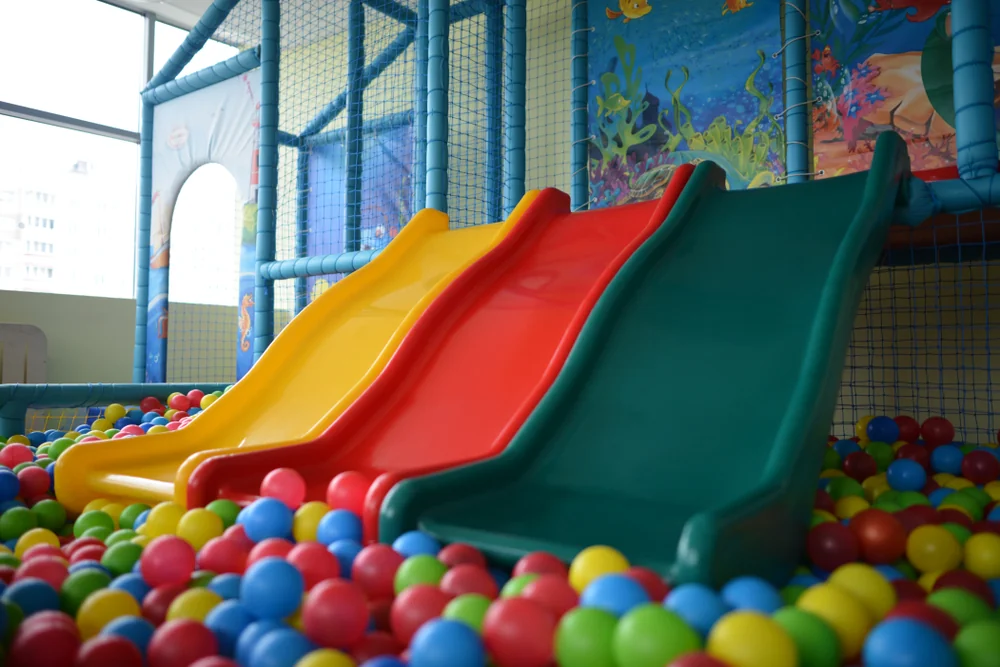
When we work with tight footprints, the goal is not to squeeze in as much as possible, but to create the illusion of openness and flow. The right equipment selection can make a compact playground feel generous, while the wrong choices make it feel cramped and chaotic.
The first principle we rely on is verticality. In small areas, we look for equipment that goes up rather than out. Multi-level decks, climbing towers and rope nets that stack play elements vertically deliver more play value per square metre than sprawling, ground-hugging structures. Tall, see-through structures in particular are valuable; when children and adults can see through the equipment, the space feels less blocked off and more expansive. Enclosed, bulky towers with solid walls, by contrast, tend to visually chop the site into pieces.
Sightlines are another key consideration. In a compact setting, clear lines of sight across the whole area make the space feel calmer and larger. We avoid placing large solid panels, high fences, or dense planting in the middle of the play zone. Instead, we favour open-framed climbers, rope-based elements and low-profile spinners that keep the eye moving through the space. For early learning centres and schools, this has the added benefit of improving supervision, which is critical when educators are managing ratios.
We also pay close attention to how equipment connects. Rather than scattering standalone items randomly, we try to create a coherent circulation route. A small circuit that links a climbing net, a slide and a balance element can feel like a “journey” even in a tight footprint. When children can move smoothly from one challenge to the next without backtracking through congested areas, the space feels more generous and less cluttered. Narrow pinch points, dead ends and awkward access routes make a small playground feel smaller very quickly.
Multi-use equipment is especially powerful in compact sites. A single structure that offers climbing, sliding, social seating and imaginative play frees up space that would otherwise be taken up by multiple separate items. We look for pieces that naturally invite different types of play at different ages, rather than hyper-specific items that only do one job. In Australian contexts where outdoor space is often shared between mixed age groups, this flexibility is crucial.
Surface treatment also has a surprising impact on perceived size. Using one continuous safety surface colour across the main play area creates a unified “floor” and makes the playground feel like a single, larger room. Too many colour blocks, edging changes, or abrupt material shifts visually chop the area into small parcels. Where we do introduce colour, we use it to lead the eye along movement paths rather than outlining rigid “zones” that fragment the space.
Finally, we consider how the playground relates to its boundaries. In small areas, placing lower, more active equipment toward the centre and reserving the highest or most visually dominant items for the edges helps “push” the boundaries out. Transparent boundary treatments, such as mesh fencing or low planting where appropriate, keep the visual field open, which again contributes to the sense that the space is bigger than it really is.
Designing a great playground in a small area isn’t about squeezing in as much equipment as possible; it’s about being intentional. Small spaces perform best when they focus on essentials: equipment that supports a wide range of ages and abilities, encourages active and imaginative play and keeps supervision simple and safe. Throughout this article, we’ve looked at how to prioritise multi-use structures, compact climbers, slides, activity panels and ground-level play elements that offer a surprising amount of play value per square metre. Just as importantly, we’ve examined what to avoid in tight footprints overseized towers, sprawling decks, cluttered layouts and high-maintenance “showpiece” items that look impressive on paper but deliver limited real-world value, especially when budgets and space are tight.
When choosing equipment for a small playground, the real win comes from making the space feel bigger than it is. That means paying attention to flow, visibility and how children naturally move through the area. Selecting equipment with open sightlines, integrated play functions and flexible use helps reduce congestion and gives families the sense of a welcoming, thoughtfully planned environment instead of a cramped corner. Avoiding visual barriers, dead zones and redundant features lets every square metre work hard. By focusing on what small play areas truly need and resisting the temptation to “over-design” you can create a compact playground that feels generous, supports a high-play capacity and clearly communicates to your community that every detail has been considered with children, carers and long-term value in mind.


.svg)

